A patient leaves a chiropractic adjustment feeling noticeably better, mentions it to a coworker at lunch, and never actually sends that coworker your way, because nobody asked at the one moment that mattered. That moment right after a good visit is the single best chance a chiropractic office gets to turn a satisfied patient into a new one, and most offices let it pass every single day.
Chiropractic patient referral program automation exists to catch that exact moment instead of relying on a front desk team member to remember between patients, chart notes, and a full schedule. Offices that build a real system around referrals consistently bring in more new patients than offices that treat referrals as something that happens only if a patient feels like bringing it up on their own.
- What chiropractic patient referral program automation actually means
- Why most chiropractic offices still ask for referrals by accident
- The 5 step automated referral sequence that actually works
- Patient referrals versus professional referrals: two different channels
- The legal guardrail most referral programs skip
- What our email outreach automation already does for this
- Your 30 day referral program launch checklist
- Why this is worth building before your next slow month
- What to do next if you do not have time to build this yourself
- FAQ
What chiropractic patient referral program automation actually means
A chiropractic patient referral program is any structured system for turning a satisfied patient into a source of new patients, on purpose, rather than hoping word of mouth happens on its own. Most offices already have the informal version: a sign at the front desk, a line in a welcome packet, a doctor who occasionally mentions it during an adjustment. None of that is wrong, but none of it runs without a person remembering to do it at the right moment, for the right patient, every single time.
Automation changes what runs the system, not the idea behind it. Instead of a staff member deciding on the spot whether today is a good day to mention referrals, a trigger does it: a completed visit, a strong satisfaction survey response, or a positive review left online. The ask goes out automatically, a unique tracking link follows the referral from the moment it is shared to the moment a new patient books, and a reward or thank you fires once that booking actually happens. The office still decides the rules. The system just makes sure the rules apply every time, not only on the days someone happens to remember.
Why most chiropractic offices still ask for referrals by accident
Chiropractic Economics, a trade publication for the profession, puts it plainly: more than 80 percent of satisfied patients are willing to refer a practice they like, yet very few practices have anything in place to actually collect on that willingness. That gap is not a mystery. A front desk team running a full schedule of adjustments, insurance calls, and rebooking is not going to reliably remember to ask patient number fourteen about referring a friend, especially on the days that are already behind.
The cost of that gap is easy to underestimate because it never shows up as a complaint or a lost patient. It shows up as new patients who simply never arrived, because the referral that would have brought them in was never asked for. ReferralRock’s research on referral marketing cites a Nielsen study finding that 84 percent of people consider referrals the most trustworthy form of advertising, with personal recommendations converting up to 50 times more effectively than a traditional ad, and referred patients carrying roughly 16 percent higher lifetime value than patients who found the practice some other way.
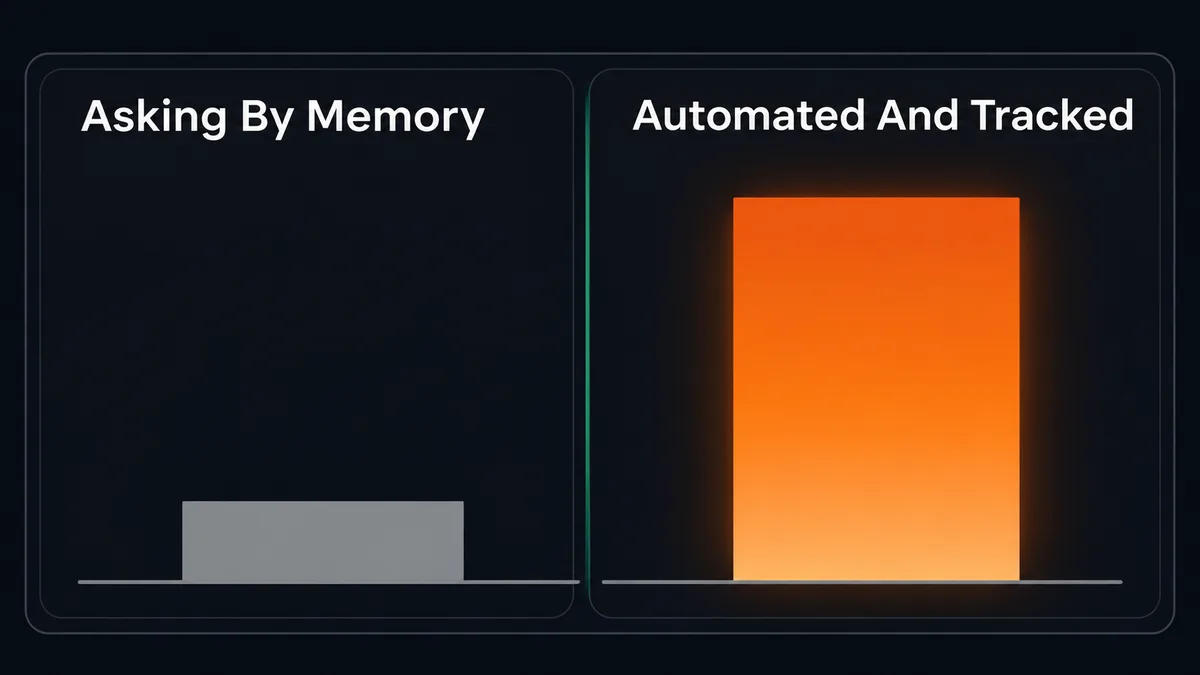
None of this means referrals are hard to earn in chiropractic care. The research says the opposite: patients are already willing. What is missing in most practices is not patient goodwill, it is a system that catches that goodwill at the moment it exists instead of letting it fade between one visit and the next.
The 5 step automated referral sequence that actually works
A chiropractic patient referral program automation sequence does not need to be complicated to work. It needs five things to happen in order, every time, without depending on a person’s memory on a busy day.
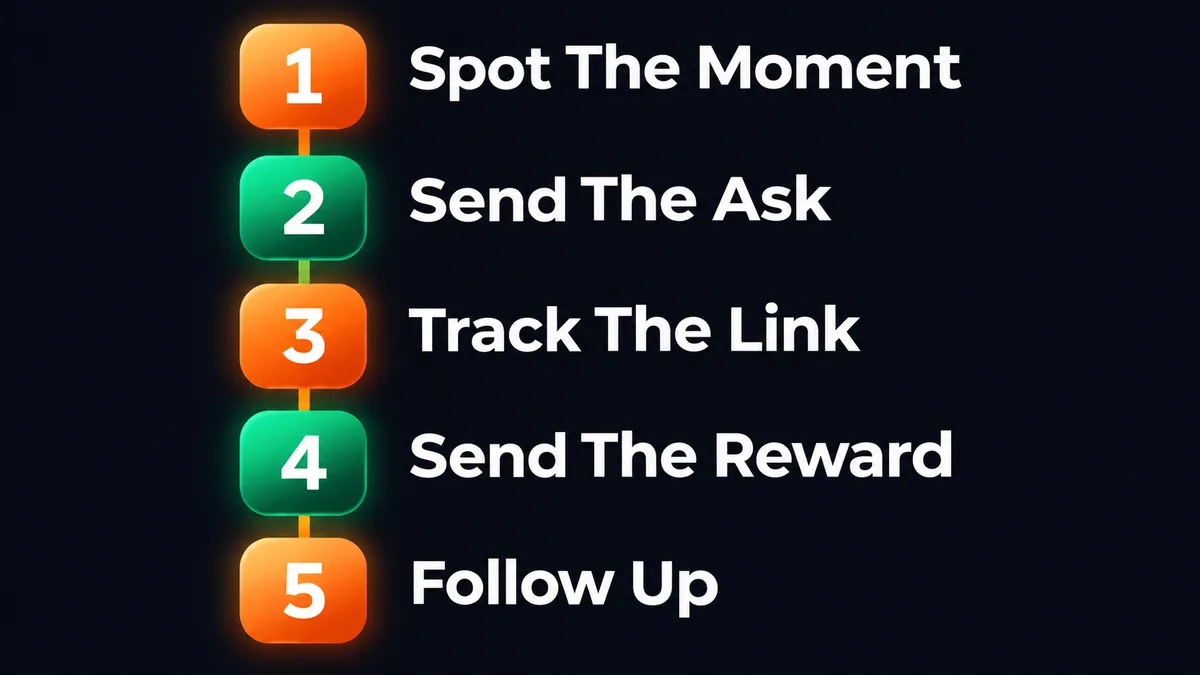
- Spot the moment. A completed visit, three or more consecutive visits, a strong satisfaction survey score, or a positive online review all point to the same thing: this patient is currently happy enough to say so.
- Send the ask. A short, specific message, not a generic flyer, goes out automatically once that moment is flagged. It names the practice directly and makes it easy to refer in under a minute, usually through a one click link that needs no account or login.
- Track the link. Every referral gets a unique link tied to the referring patient’s name, so when a new patient books through it, the system already knows exactly who sent them. No manual spreadsheet, no asking a new patient to remember who told them about the practice.
- Send the reward. Once the referred patient actually books and shows up, not before, the referring patient receives their thank you, whether that is a reward for a private-pay patient or a charitable donation where that is the compliant choice. The timing matters: rewarding too early, before a real booking happens, trains patients to send names that never convert.
- Follow up. A short thank you note, separate from the reward itself, closes the loop and keeps the patient aware the program exists for next time. Practices that skip this step see referral activity fade after the first round, since nothing reminds patients the option is still open.
Each of these five steps is small on its own. What makes the sequence work is that it runs the same way for every patient, every time, instead of depending on which staff member happens to be at the front desk that day.
Patient referrals versus professional referrals: two different channels
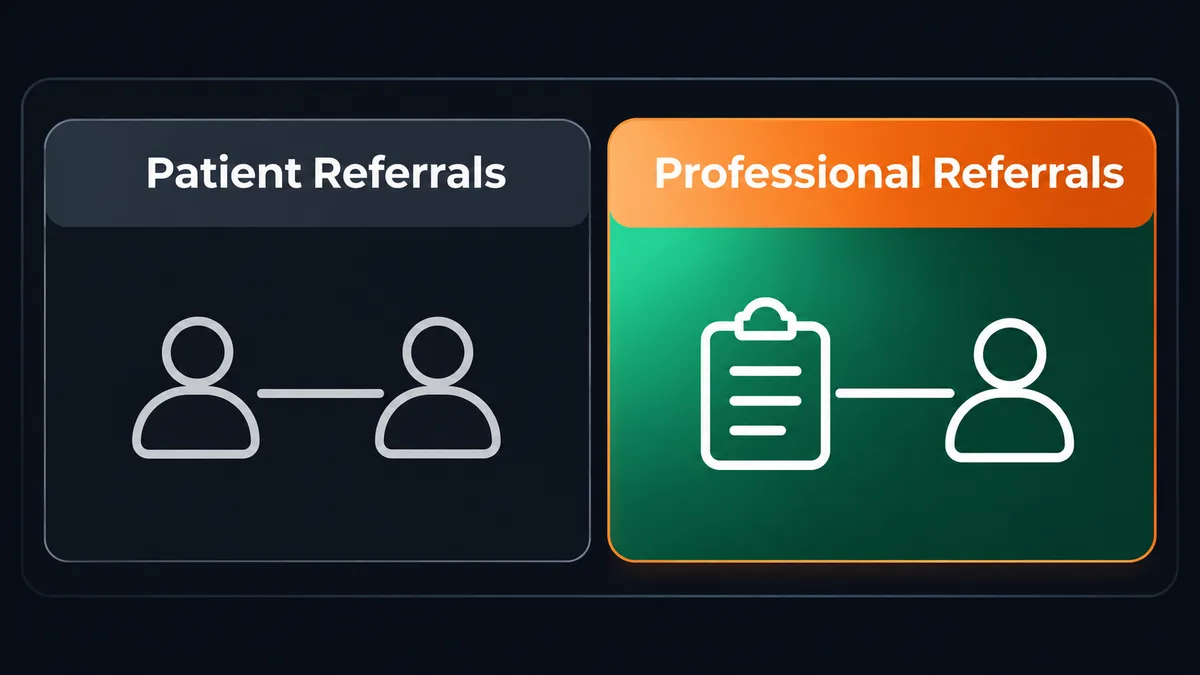
Patient-to-patient referrals are not the only referral channel a chiropractic practice has, and treating them as the only one leaves real growth on the table. A pcp referral chiropractor relationship, where a primary care physician or a physical therapist sends a patient directly, runs on a completely different mechanism than a patient telling a friend at lunch.
Patient referrals are built on trust in the experience: a patient refers because the adjustment worked and the visit felt good. Professional referrals are built on trust in clinical judgment: a physician refers because they believe the chiropractor will handle the case competently and communicate back about the outcome. A practice chasing one and ignoring the other is only running half of its available referral pipeline.
The automation mechanics differ too. Patient referrals respond well to the trigger-based, reward-backed sequence described above. Professional referrals respond better to a different rhythm entirely: a consistent, low-pressure touch with referring providers, paired with reliable communication back about how their patient is doing. A chiropractic patient referral program that only covers patients, and never touches the professional referral relationship, is leaving one of the two real channels almost entirely to chance.
The legal guardrail most referral programs skip
Before any practice sets up a reward for referrals, there is one real compliance line that matters and is easy to miss. ReferralRock’s guidance on healthcare referral programs is direct about the split: cash, gift cards, or service credits are a reasonable reward for private-pay patients, but for patients whose care is billed through a government-funded program such as Medicare or Medicaid, a direct cash or gift reward tied to a referral can run into federal anti-kickback rules. The compliant substitute most practices use instead is a charitable donation made in the referring patient’s name.
This is not a reason to avoid rewarding referrals. It is a reason to build the reward logic into the automation itself, so the system checks which payment category a patient falls into before deciding whether a reward is a gift card or a donation, instead of leaving that judgment call to whoever happens to process the reward that week. Getting this wrong is a real legal exposure, not a minor technicality, which is exactly why it belongs inside the system rather than inside someone’s memory of the rule.
What our email outreach automation already does for this
We have already written separately about bringing back lapsed chiropractic patients, which is a different problem than referrals: that piece covers patients who stopped coming in, not patients who are currently happy and simply never asked to refer anyone. The referral sequence described above runs on the same underlying mechanism as that reactivation work, just pointed at a different trigger in the patient relationship.
Through our email outreach automation, a completed visit or a strong survey response adds a patient to a referral track automatically. The ask goes out on schedule, the tracking link ties each referral back to the right patient, and the reward or follow up fires only once a referred patient actually books, not before. The same dashboard that shows a practice its new-patient pipeline also shows exactly which patients are in the referral sequence and where each one sits, so nothing depends on a sticky note at the front desk.
Setup is a flat $299 one time, with a $149 monthly fee that covers the sequencing and the dashboard. There is a 7-day trial after go-live, with a full refund if it is not working the way it should.
Your 30 day referral program launch checklist
Whether this runs by hand to start or goes straight to automation, the same questions decide whether a referral program actually produces new patients or just sits unused in a drawer:
- Is there a clear moment that triggers the ask, such as a completed visit or a strong survey score, rather than leaving the timing up to whoever is at the desk?
- Does every referral get a trackable link or code, so the practice always knows who sent a new patient without relying on anyone’s memory?
- Is the reward structure checked against each patient’s payment type, with a charitable donation ready as the compliant substitute for government-funded patients?
- Does the reward fire only after a referred patient books and shows up, rather than the moment a name is submitted?
- Is there a separate plan for professional referrals, covering physicians and physical therapists, not just patient-to-patient asks?
- Is someone actually tracking how many new patients the program brings in each month, so the practice knows whether it is working or just running?
Why this is worth building before your next slow month
A chiropractic practice that brings in ten new patients a month through cold marketing and gets another five through referrals it never deliberately asked for is already proving referrals work. The only thing standing between that practice and a far larger number is a system that asks consistently instead of occasionally. Referred patients already arrive with a built-in reason to trust the practice, since a friend already vouched for it, which tends to mean an easier first visit and a stronger start to the relationship than a patient who found the practice through a cold ad.
We have built and run more than 30 automations across 300 or more client projects, and the pattern that shows up across small service businesses of every kind, chiropractic practices included, is the same one: the growth that gets left on the table is rarely the growth that requires new marketing spend. It is the growth that was already available inside the existing patient base, waiting on a system that asks at the right moment instead of hoping someone remembers to.
What to do next if you do not have time to build this yourself
Start with the moment, not the reward. Decide what actually counts as a trigger in your practice, whether that is a third consecutive visit, a strong survey response, or a five star review, and write down exactly what message should go out when that moment happens. Getting that one decision right matters more than picking the perfect reward.
If the honest answer is that nobody on staff has the time to track who was asked, who referred whom, and whether the reward actually went out, that is exactly the gap our email outreach automation is built to close, running the same five step sequence described above in the background for every patient, every month, without a single referral slipping through because nobody remembered to ask.
FAQ
What is the best way to ask a chiropractic patient for a referral?
Ask right after a moment the patient is clearly satisfied, such as a completed course of care, a strong survey response, or a positive review, with a short, specific message and a one click way to share the referral. A vague request made at a random time converts far less often than a specific one made at the right moment.
Can chiropractic patient referral requests be automated?
Yes. A visit completion, a survey score, or a review can all trigger an automatic referral request, with a tracking link that follows the referral through to a booked appointment and a reward that fires once that booking actually happens, all without a staff member remembering to send anything manually.
Is it legal to reward chiropractic patients for referrals?
For private-pay patients, yes, a gift card, service credit, or similar reward is standard practice. For patients whose care is billed through Medicare or Medicaid, a direct cash or gift reward can run into federal anti-kickback rules, and a charitable donation made in the patient’s name is the compliant substitute most practices use instead.
How is a patient referral different from a PCP referral for a chiropractor?
A patient referral comes from someone who experienced the care firsthand and trusts the result. A pcp referral chiropractor relationship comes from a physician or physical therapist who trusts the chiropractor’s clinical judgment and communication, not the patient experience itself. Both are real referral channels, and a practice that only builds a program for one is leaving the other almost entirely to chance.
How many new patients can a referral program realistically bring in?
That depends entirely on patient volume and how consistently the ask goes out, so there is no universal number worth repeating here. What research consistently shows is that referred patients convert at a meaningfully higher rate and carry higher lifetime value than patients from most other channels, which is why a consistent system matters more than any single projected count.
Do I need special software to run a chiropractic referral program?
No, a small practice can run a basic version by hand with a referral card and a notebook. Software or automation becomes worth it once manually tracking who referred whom, checking payment type against reward type, and remembering to send both the ask and the thank you becomes more than one person can reliably keep up with.
A chiropractic patient referral program does not need a bigger marketing budget or a louder social media presence to work. It needs a system that catches the moment a patient is happy enough to refer, asks clearly, tracks the result, and rewards it correctly, every single time, instead of only on the days someone at the front desk remembers. The practices already earning more referrals are not doing anything their competitors could not also do. They just built a system around it instead of hoping it happens on its own.