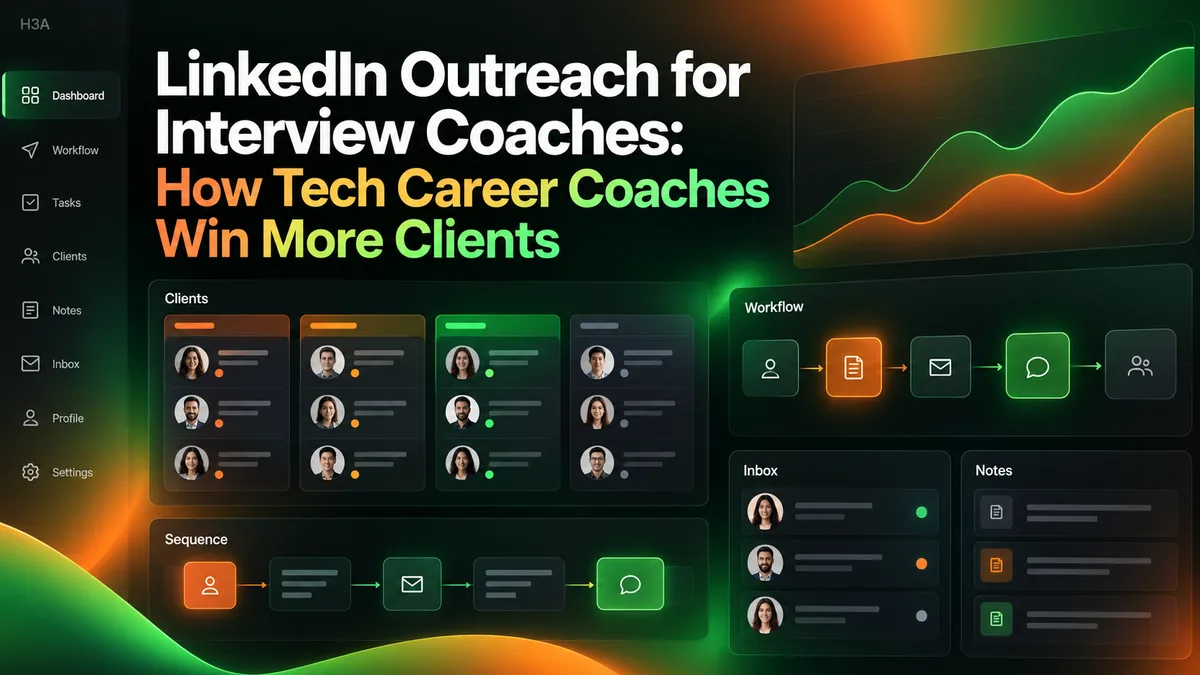
Most interview coaches who work with tech candidates built their client list the same way: referrals, a LinkedIn post that did well once, maybe a listing on a coaching directory. That works until the pipeline goes quiet, and then there is no real system behind it, just a hope that the next good post performs the same way the last one did. LinkedIn outreach for interview coaches fixes that specific gap: a repeatable way to find and contact the tech workers who are actually looking for interview help, instead of waiting for them to find you.
Quick Answer
LinkedIn outreach for interview coaches works by researching tech candidates who match your coaching focus, sending a connection request and a short personalized sequence, and tracking replies on a dashboard. Done correctly it replaces inconsistent referral flow with a steady, measurable source of new coaching clients, without the account bans that come from generic mass-DM tools.
Table Of Contents
- Why LinkedIn Outreach Matters for Interview Coaches
- Why Tech Workers Behave Differently on LinkedIn
- The Real Risk With Self Managed LinkedIn Tools
- Self Managed Tool vs Done For You Service
- How Done For You LinkedIn Outreach Works
- What a Real Outreach Sequence Looks Like
- Getting the Profile Ready Before Outreach
- A Checklist Before You Start
- Why This Matters More for Coaches
- What To Do Next
- FAQ
Why LinkedIn Outreach Matters for Interview Coaches
Tech candidates spend time on LinkedIn whether they are actively job hunting or not. A laid off engineer updates their headline within a day. A product manager preparing for a round of onsites checks who is posting about interview prep. A bootcamp graduate looking for their first role follows anyone who talks about technical interviews. The audience is already there, searching, scrolling, and in many cases already open to paying for help. The coaches who show up in that scroll with a direct, well timed message get the conversation. The ones who only post and wait get whatever is left over.
The global coaching market reached roughly $5.34 billion in 2026, according to ICF coaching industry data, up from about $2.35 billion in 2015. Demand for coaching is not shrinking. What is changing is how people expect to be reached: fewer cold emails that sit unread, more direct, relevant LinkedIn conversations with someone who clearly understands their specific situation. For a coach focused on tech interviews, that means outreach has to speak to a tech candidate’s actual problem, not a generic “grow your career” pitch that could apply to anyone.
Search behavior backs this up too. A candidate who just got a recruiter screen booked does not search Google for “career coach,” they search for something specific: “system design interview help,” “FAANG onsite prep,” “how to answer behavioral questions for a PM role.” Most of that search traffic lands on a handful of large, generic coaching directories rather than an individual coach’s page, simply because those directories outrank almost everyone on broad terms. LinkedIn outreach sidesteps that competition entirely. Instead of trying to outrank a directory for a broad keyword, the coach goes directly to the exact person who fits their specialty, before that person has even finished searching.
Why Tech Workers Behave Differently on LinkedIn
Tech candidates are not a generic LinkedIn audience, and treating them like one is the fastest way to get ignored. A software engineer preparing for a system design round wants something concrete: practice with a specific interview format, feedback on a specific weak spot, a coach who has actually seen what that interview looks like. A product manager switching companies cares about behavioral rounds and leveling conversations more than technical whiteboarding. A recent bootcamp graduate is worried about something different again: getting past the resume screen in the first place.
Good outreach for this audience names the actual situation instead of a vague promise. “Message written for an engineer two weeks from a FAANG onsite” performs differently than “message written for anyone open to career coaching,” because the first one reads like it was written by someone who understands the problem, and the second one reads like every other message in that person’s inbox. This is also where tech career coach leads differ from leads in most other coaching niches: the audience is more skeptical of generic sales language and more responsive to specifics, because specificity is exactly what they are trained to look for in their own work.
A message written for “anyone looking to grow their career” reads like spam to a tech candidate. A message written for “an engineer two weeks from a system design round” reads like it was worth opening.
The Real Risk With Self Managed LinkedIn Tools
Most coaches who try to automate LinkedIn outreach themselves reach for a self managed tool: something you install, configure, and run on your own account. These tools can work, but the account safety part is entirely on the person running them. Set the sending volume too high, skip a personalization step, or miss a platform detection pattern, and the result is a restricted or banned account, which for a coach means losing the exact channel their clients are on.
There is also a time cost that rarely gets counted. Writing sequences, setting pacing rules, watching for replies, and adjusting messages when response rates drop is a part time job on top of actually coaching clients. Most coaches who try this seriously for a few months end up either under using the tool out of caution, or over using it and risking the account, because there is no real middle setting built into software that was designed to be configured by anyone, for any use case.
There is a second, quieter cost: message quality drops under time pressure. A coach juggling actual client sessions during the day tends to write outreach messages late at night, in a rush, between other tasks. Those messages read that way to the person receiving them. Tech candidates in particular notice a generic, rushed message quickly, because evaluating how something was put together is close to what their own jobs involve.
LinkedIn Outreach for Interview Coaches: Self Managed Tool vs Done For You Service
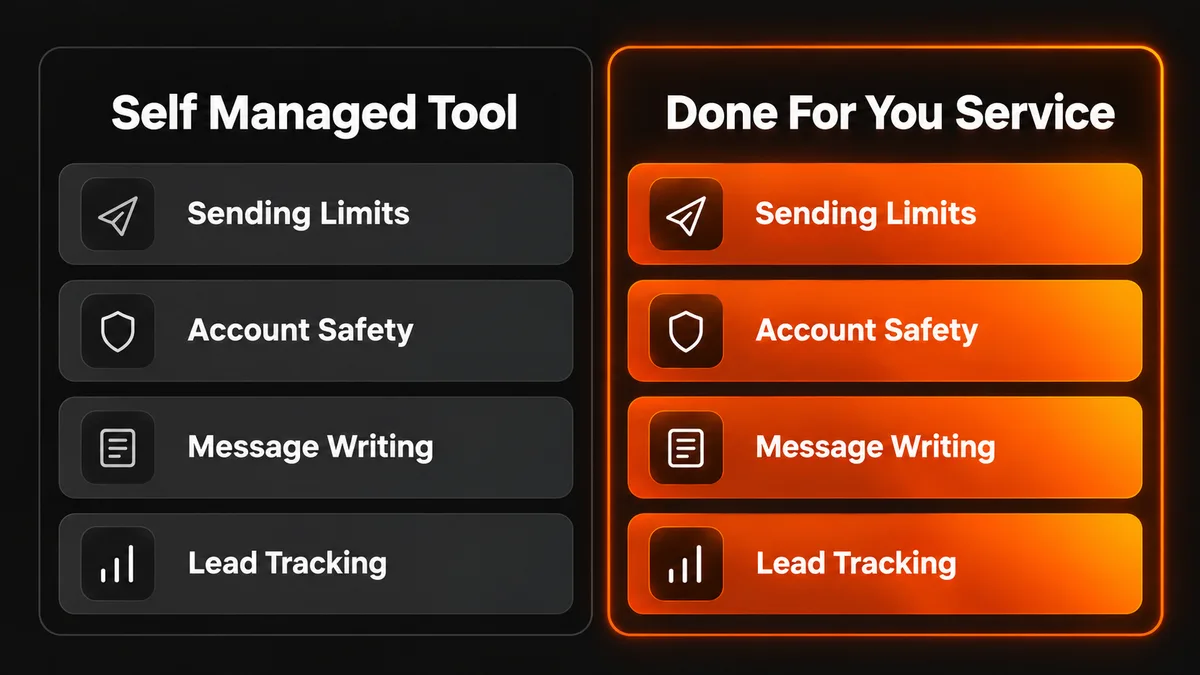
The difference between a self managed tool and a done for you service is not features on a page, it is who carries the risk and who does the work. With a self managed tool, the coach sets sending limits, writes the sequence, and watches the account for warning signs. With a done for you service, sending is paced by people who already know where the platform’s detection thresholds sit, messages are written specifically for each prospect instead of a mail merge, and replies land in a dashboard the coach actually checks, instead of a tool the coach has to remember to log into.
This is the structure behind H3A’s own Social Media Outreach Automation: leads are researched against the coach’s real ICP first, the LinkedIn sequence follows the platform’s own rules (connection request, then a value message, then a follow up, then a clean close), and the pacing is handled by people who built the system specifically to avoid the mistakes that get self managed accounts flagged.
The tools are not the problem. Being the one responsible for configuring, pacing, and babysitting them while also running a coaching practice is the problem.
How Done For You LinkedIn Outreach Works
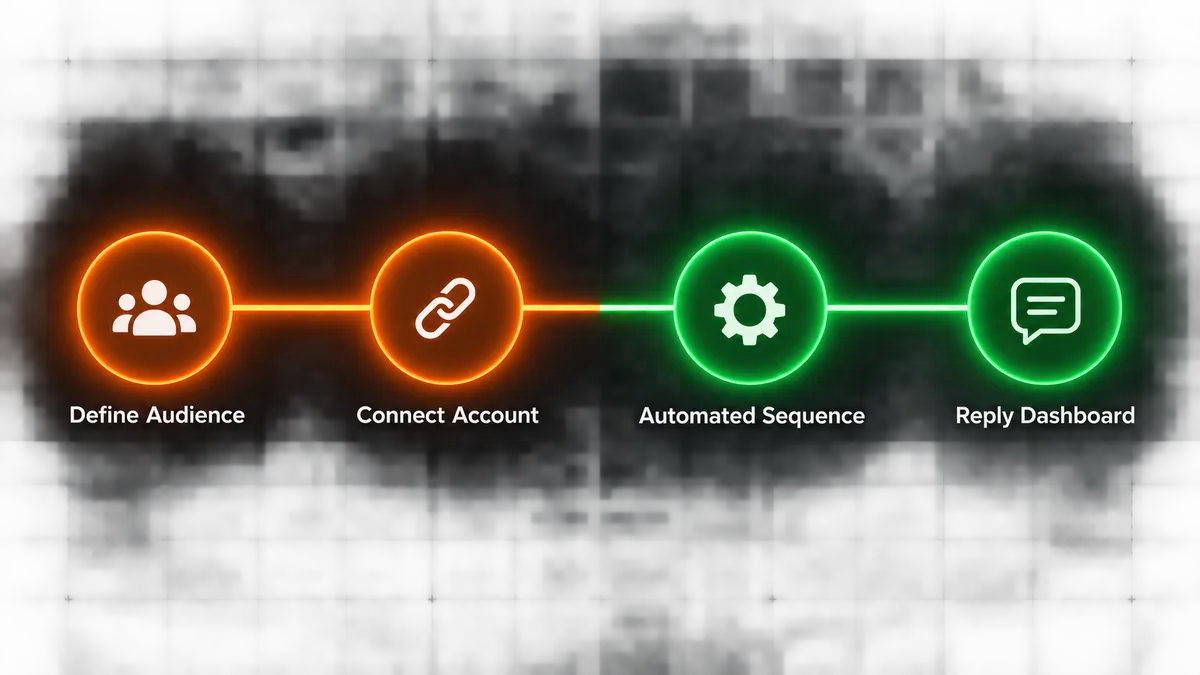
The sequence has four real steps. First, the coach defines who they are looking for: which roles, which seniority, which specific interview stage they help with most (early screens, technical rounds, final loop behavioral conversations). Second, the LinkedIn account connects through an official, secure connection, never a password handed over and never a browser script pretending to be the account owner.
Third, the system starts running: prospects are researched individually, sequences are sent at a pace built to stay under platform detection thresholds, and nothing goes out that was not written for that specific person. Fourth, the coach watches it work from a dashboard that shows real lead by lead progress, with a notification the moment someone actually replies, not a vague “campaign running” indicator.
None of this requires the coach to learn a new tool or spend evenings configuring settings. The entire point of a done for you model is that the operational weight sits with the people running the system, not with the person whose actual job is coaching.
What a Real Outreach Sequence Looks Like for a Coaching Practice
A LinkedIn sequence built for interview coaching clients usually runs in four messages. The first is a connection request with a short, specific reason for reaching out, never a blank request. The second, sent once the connection is accepted, is a value message: something genuinely useful tied to the person’s actual situation, not an immediate pitch. The third is a follow up a few days later if there has been no reply, often reframing the same offer from a different angle. The fourth is a clean close: a direct, low pressure way to continue the conversation if there is interest, and silence if there is not.
This is a meaningfully different approach from linkedin dm outreach for coaches that relies on volume alone. Sending the same message to five hundred people and hoping ten reply is the self managed default. A sequence built around a real ICP and genuine personalization produces fewer total messages and more real conversations, because the people being contacted were chosen for a reason in the first place.
A sequence is not four messages sent on a timer. It is four messages that each earn the right to send the next one.
Getting the Profile Ready Before Outreach Starts
A LinkedIn profile is the first thing a candidate checks after accepting a connection request, usually before reading the next message. A headline that says “Career Coach” tells a candidate nothing about whether this specific coach can help with a system design round or a behavioral loop. A headline that says “Interview coach for software engineers, system design and behavioral prep” answers the candidate’s first real question before they even open a message.
The about section matters the same way. Candidates read it looking for one thing: proof that this coach has actually worked with people in a similar role, at a similar company tier, facing a similar interview format. A profile with recent posts about real interview topics, rather than generic career advice, also gives outreach messages somewhere useful to point. “I wrote about this exact round last week” is a stronger second message than a blank follow up with nothing behind it.
A Checklist Before You Start LinkedIn Outreach as a Coach
- Write down the exact candidate you help best. “Software engineers two to four years in, preparing for system design rounds” works. “People looking to grow their career” does not give an outreach sequence anything to say.
- Decide which interview stage is your real specialty. Early screens, technical rounds, and final loop behavioral conversations each need a different pitch and often a different audience.
- Check your current LinkedIn account health. A new or inactive account needs a slower ramp than one that already posts and engages regularly.
- Set a real reply handling process. A fast, honest response to a genuine reply matters more than almost anything else in this channel.
- Decide if Instagram should run alongside LinkedIn. Some coaching audiences, especially newer professionals, check Instagram DMs as often as LinkedIn.
- Pick a trial period and a real way to judge it. Replies and booked calls in the first few weeks are a better signal than connection acceptance rate alone.
Why This Matters More for Coaches Than for Most Other Businesses
A coaching practice is usually one or two people. There is no sales team to absorb a quiet month, and there is no marketing department to fix a broken outreach channel while the coach keeps coaching. That makes career coach lead generation a direct bottleneck on income in a way it is not for a larger company with more people and more channels running at once. A slow month for a solo coach is not a line item on a report somewhere, it is rent and groceries, which is exactly why a channel that runs consistently in the background carries more weight here than it would for a business with five other channels to fall back on.
H3A has delivered 300+ automation projects and built 30+ automations that run without a person manually operating them day to day, saving clients 1,200+ hours of work across those builds, numbers published on our About page. The same core system already runs LinkedIn outreach for a general coaching audience through our LinkedIn outreach for business coaches work, adapted here specifically for the tech interview coaching audience and the way tech candidates actually respond to outreach.
What To Do Next
If the current client pipeline depends entirely on referrals and the occasional post that does well, LinkedIn outreach is the most direct way to get interview coaching clients on a schedule instead of by luck. The decision that actually matters is not whether to try outreach, most coaches already agree it would help, it is whether to build and babysit it personally or have it run without becoming a second job.
Social Media Outreach Automation is $299 for setup and $149 a month for one platform, LinkedIn or Instagram, with a second platform available for an additional $50 a month. There is a 7 day trial with a full refund if it is not working, and no long term contract to sign first. An optional WhatsApp notification add on is available for $29 a month for coaches who want a reply alert somewhere other than email.
FAQ
Will LinkedIn outreach get my account restricted?
The biggest risk comes from sending too fast or too generically, which is exactly what a done for you service is built to avoid. Pacing is handled specifically to stay under the platform’s own detection thresholds, so the account is not left guessing at safe limits.
Can I message tech candidates I am not connected with yet?
Not directly. LinkedIn requires a connection first, which is a platform rule rather than a limitation of any particular tool. A real sequence sends the connection request first, then messages once it is accepted.
How is this different from a tool like HeyReach or Dripify?
Those are self managed tools: software you configure, pace, and monitor yourself, including every account safety setting. A done for you service runs the research, writing, pacing, and monitoring as a managed service, so there is nothing to configure and nothing to watch for warning signs.
Do I need a large existing LinkedIn following to start?
No. Outreach works independently of follower count because it is based on direct research and contact, not on how many people already follow the account. A newer account simply starts with a slower sending pace.
Can I run this alongside Instagram outreach too?
Yes. A second platform can be added for an additional $50 a month, which matters for coaches whose candidates, particularly newer professionals, check Instagram as often as LinkedIn.
What happens if it is not working for me?
There is a 7 day trial with a full refund if it is not producing results, and no long term contract required to try it in the first place.
Tech candidates are already on LinkedIn, already searching for interview help, and already deciding which coach to message first. LinkedIn outreach for interview coaches is the difference between being the coach they happen to find and the coach who actually reached out, built specifically around how this audience responds rather than a generic script borrowed from a different niche entirely.