AI Outreach Automation vs. Hiring: What Actually Costs Less
Every founder trying to grow past referrals hits the same fork in the road. You need someone reaching out to real prospects every day, and you have two real options: hire someone to do it, or automate it. The real question of ai outreach automation vs hiring comes down to gut feeling for most people, a vague sense that hiring feels more serious or that automation feels riskier, without ever actually running the real numbers side by side. The real numbers tell a clearer story than the gut feeling does, and they’re worth seeing plainly before making a decision that shapes a real chunk of your budget for the next year.
We get this question directly, often, from people who’ve never actually run the math side by side. Some assume automation must be cheap and low-quality by definition, and some assume a hire is automatically the “real” way to do this. Neither assumption survives contact with the actual numbers. So here it is, with real figures, not a sales pitch dressed up as a comparison.
Quick answer:A fully loaded in-house hire for outreach runs $75,000 to $100,000 a year in the US once you count salary, benefits, and training. AI outreach automation done properly runs a fraction of that, and it starts producing real contacted leads within days instead of the weeks a new hire needs to ramp up. Hiring still makes sense in specific situations, covered honestly below, but for most small businesses the math isn’t close.
A single outreach hire (an SDR, a business development rep, whatever title you give it) isn’t just their salary. Once you add real benefits, payroll taxes, a laptop and software stack, and the actual time it takes to hire and train someone, a fully loaded outreach hire in the US typically runs $75,000 to $100,000 a year. That’s before you account for the real ramp-up period: most new hires take one to three months before they’re producing real, qualified conversations, not just activity.
There’s also a cost that doesn’t show up on a spreadsheet: consistency. A person gets sick, takes vacation, has an off week, or leaves for another job six months in and takes the relationships they built with them. Replacing them means running the whole hiring and ramp-up process again from zero, on top of whatever pipeline gap opens up while the seat sits empty. None of that is a criticism of hiring. It’s just the real, honest shape of what you’re actually buying when you hire a person for this work.
What AI outreach automation actually costs
Done-for-you AI outreach automation runs on a completely different cost structure. Our own Email Outreach Automation is $299 one-time setup and $149 a month, covering up to 1,000 leads contacted monthly, with an option to add capacity for more. Social Outreach Automation (LinkedIn and Instagram) starts at $299 setup and $149 a month for one platform. Buy both together in the Growth Bundle with Content Automation and the combined price drops further, since the underlying infrastructure and onboarding are shared across all three rather than each one starting from scratch.
The system doesn’t take a ramp-up period the way a new hire does. It researches leads, scores them against your real ICP, writes personalized outreach, and sends it starting in the first week, not the first quarter.
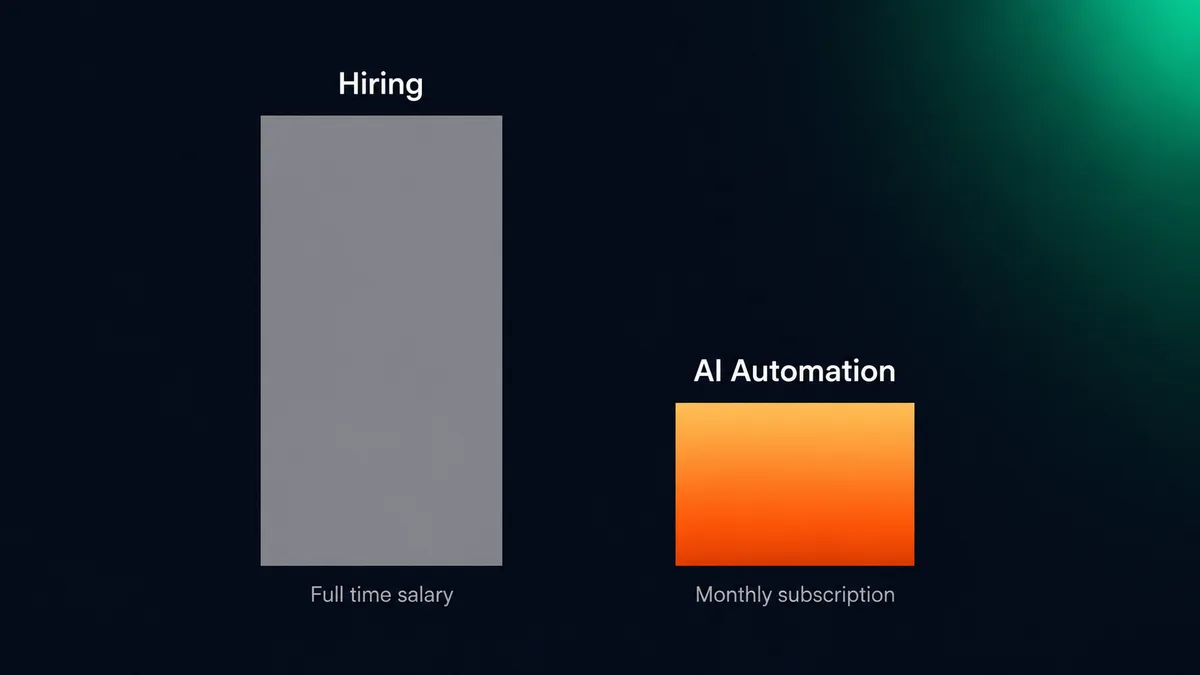
A $149-a-month system and a $75,000-a-year hire aren’t competing for the same budget line. They’re solving the same problem at completely different price points.
What you actually get with each option
A good hire brings real judgment, relationship-building instinct, and the ability to handle a genuinely unusual objection on the fly. That’s real and valuable, and no automation fully replicates it yet. What automation reliably beats a person on is volume and consistency: the same quality of research and personalization on lead 500 as on lead 5, every single day, without a bad morning affecting the output.
Scale without the hiring problem
Want to double your outreach volume with a hire, you’re hiring a second person, with a second full ramp-up period and a second full salary. Want to double it with automation, you’re adjusting a setting and paying an incremental fee for the extra leads, not restarting the whole hiring process.
What actually happens once it’s running
With a hire, day one usually looks like account setup, tool training, and shadowing someone else’s process before they ever send a real message. With automation, onboarding is a short conversation about who you’re targeting, your tone, and your approval preferences, then the system connects your accounts and starts researching real leads against your actual ICP, not a generic template. The leads it finds get scored, sequenced, and contacted, with a dashboard showing exactly what happened and why, not a black box you have to trust blindly.
The real math, side by side
Take a realistic first year. A hire at the low end of that $75,000 range costs roughly $6,250 a month once spread out, before benefits and training time are even added in. H3A’s Email Outreach Automation runs $299 once, then $149 a month. Over twelve months, that’s $2,087 total for the automation versus $75,000 for the hire, a gap of roughly $73,000 in year one alone, before counting the weeks a new hire spends ramping up before producing anything. That gap doesn’t close in year two either. It’s not a launch discount. It’s the real, ongoing cost structure of the two approaches.
AI outreach automation vs hiring: where hiring still makes sense
Being honest about this matters more than winning the argument. If your sales process is genuinely consultative, high-touch, and still evolving week to week, a skilled human closer or account executive is the right call. If you need someone building relationships at industry events, managing a complex multi-stakeholder deal, or making judgment calls that need deep, current context a system doesn’t have, that’s a person’s job. Outreach automation is built for the research-and-first-contact layer of the funnel, not the entire sales function.
There’s a real staffing pattern worth naming too: a lot of businesses that eventually automate outreach started by hiring, and the hire is exactly what taught them what a good process actually looks like. If you’ve never run outreach at all, having a person figure out the real messaging, objections, and ICP details first, then automating that proven process afterward, is sometimes the smarter order. Automating a process nobody has actually validated yet just means finding out it doesn’t work at scale instead of finding out with one person’s time.
Why this isn’t the same as a generic self-serve tool either
There’s a real third option people sometimes confuse with what we’re describing: a self-serve outreach tool you configure yourself. That’s genuinely different from done-for-you automation, and worth being clear about. A self-serve tool gives you a system and expects you to build the sequences, define the scoring, and keep tuning it. Done-for-you automation is built and run for you, on your actual business data, and kept current as an ongoing service rather than a one-time setup.
That last part is the real reason a monthly retainer makes sense here instead of a one-time purchase. Most vendors in this space run a light, mostly generic setup once and leave it alone. The real difference in a properly done system is that research on your specific market, your specific ICP, and what’s actually working keeps happening every week, not just at kickoff.
New real data about your business, who’s responding, what messaging lands, gets fed back into the system continuously, so the targeting and writing keep improving instead of freezing at whatever was true on day one. A hire’s judgment improves the same way, through repetition and feedback. A properly run automation should improve the same way too, not just run the same script forever.
A practical way to decide
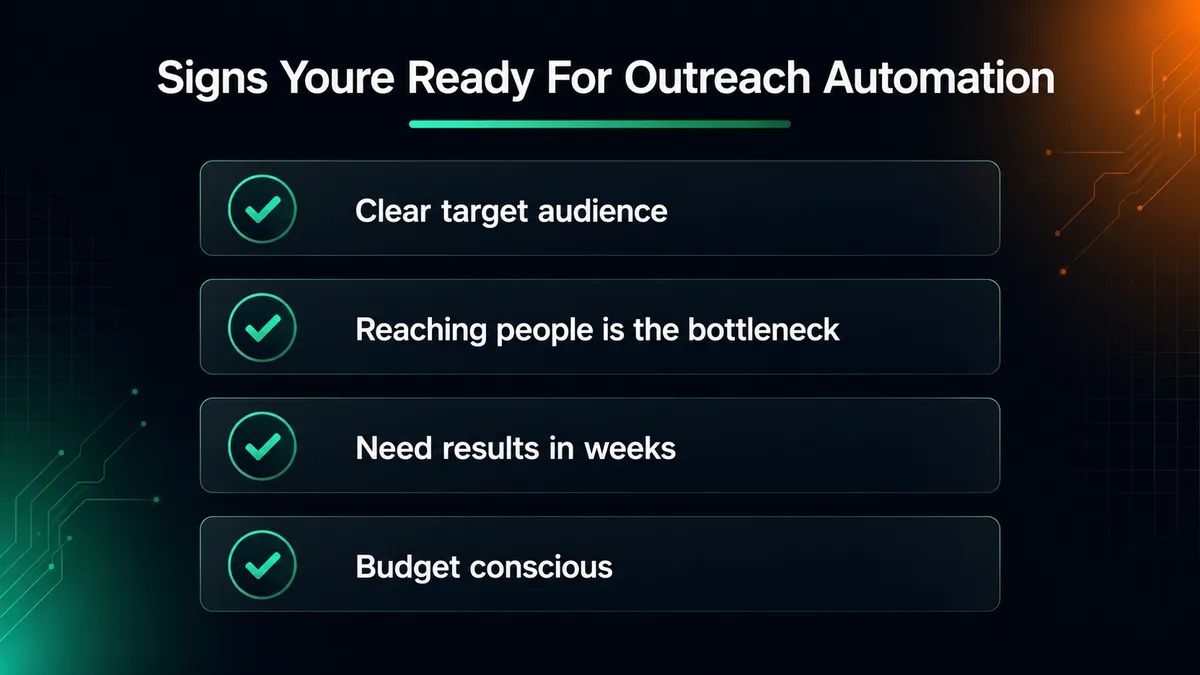
You know who you’re targeting, but reaching them consistently is the bottleneck. If your ICP is clear, you know what a good-fit customer actually looks like, and the real problem is finding the hours to research and reach enough of them every week, automation is the direct fit. That’s exactly the layer it’s built to handle.
Your sales process is still being figured out. If you’re still discovering who actually buys, why they buy, and what objections come up in a real conversation, a hire’s on-the-ground judgment is more valuable right now than a system’s consistency. You need someone who can adapt in real time to what they’re learning, not a process that assumes the answer is already known.
You need this running in weeks, not a quarter. Automation starts producing real contacted leads almost immediately once onboarding is done. A hire needs real ramp time first, typically one to three months before output reflects their actual capability rather than their learning curve.
Budget matters, and it usually does. If $75,000 to $100,000 a year isn’t realistic right now, that alone answers the question for most small businesses, regardless of how the other three factors shake out.
None of these four questions has to be answered in isolation. Most real businesses land somewhere in between, and the honest answer is often “start with automation for the volume layer, and bring in a person once the pipeline it produces is big enough to need dedicated closing.” That’s a real, common path, not a compromise.
What getting this wrong actually costs
The businesses that struggle most are the ones that pick based on what sounds more impressive rather than what their actual stage needs. Hiring too early, before the process is proven, means paying a real salary to figure out something that hadn’t been figured out yet, and that salary keeps running whether the person succeeds quickly or spends six months finding their footing. Automating too early, before you actually know who you’re targeting, means a system running consistently against the wrong list, which just produces a lot of well-organized activity that never converts.
Small businesses that automate the right, already-understood layer of repetitive work tend to see it pay for itself within 30 to 90 days. The ones that automate a process they haven’t actually figured out yet just get consistent, well-organized failure instead of inconsistent failure, which is arguably worse, because it looks like it’s working from the activity metrics alone, and the real problem (wrong targeting, wrong message) stays hidden behind a busy-looking dashboard.
The fastest way to avoid both mistakes is the same either way: know your ICP for real, with actual evidence of who responds and why, before scaling the reaching-out part with either a hire or a system. Everything downstream of that decision gets easier once that one thing is genuinely clear.
What to do next
If your targeting is clear and reaching people consistently is genuinely the bottleneck, the math above is worth running for your own numbers before you post a job listing. Write down your own realistic hiring cost, your own realistic timeline, and compare it honestly against what a done-for-you system actually costs for your real lead volume. If you want to see what real, done-for-you outreach automation actually looks like against your own ICP, not a generic demo, that’s exactly what a short call is for. You can also see the live dashboards, pricing and trial terms on the Email Outreach Automation page first.
Is AI outreach automation actually as effective as a real person?For the research, scoring, and first-contact layer, yes, often more consistently, since it doesn’t have an off day. For genuinely complex, evolving sales conversations, a skilled person still adds judgment automation doesn’t fully replicate yet.
Can I use both a hire and automation together?Yes, and it’s a common real setup: automation handles research, scoring, and the first outreach touch at scale, and a person takes over once a real conversation starts. Many businesses run exactly this combination, especially once volume grows past what one person can realistically follow up on personally, and it’s often the natural next step after automation has already validated what a good lead and a good message actually look like.
How fast can outreach automation actually start producing results?Real onboarding covers your ICP, tone, and account connections, typically a short setup period rather than a hiring-length ramp. After that, the system runs daily rather than needing weeks to reach full productivity the way a new hire does.
What happens if my ICP or messaging changes?A real system should be adjustable the same way managing a person is: you update the direction, and it adapts. If a vendor’s system can’t take a real update without a full rebuild, that’s worth asking about before you commit.
Does this replace the need for a salesperson entirely?No. It replaces the research-and-first-contact layer of outreach, the part that’s genuinely repetitive and where consistency matters more than judgment. Closing, relationship management, and complex deals still benefit from a real person who can read a room and adapt in the moment, which is exactly why the two aren’t really in competition with each other so much as covering different parts of the same funnel.
Is there a trial period before committing?Yes, H3A’s outreach automations include a 7-day trial with a full refund if it’s not working for your business, the same standard guarantee across every H3A service. That’s a real, meaningful window compared to a hire, where the real cost of a bad fit usually isn’t clear until well past any reasonable trial period.
What if I already have a hire doing outreach part-time?That’s a common real situation, not an edge case. Automation can take over the research and initial-contact volume your part-time hire doesn’t have hours for, freeing their time for the conversations that actually need a person, rather than replacing them outright.
The honest version of the ai outreach automation vs hiring comparison: a hire brings judgment automation doesn’t fully have yet, and automation brings consistency and cost a hire can’t match at this price point. Neither option is wrong in the abstract, they’re just built for different real situations, and most of the confusion in this decision comes from treating it as one-size-fits-all when it genuinely isn’t.
For most small businesses trying to build a steady flow of new conversations without a $75,000-a-year commitment, the math points one direction, and it’s worth running for your own real numbers, your own budget, your own stage, before you decide. The businesses that get this right aren’t the ones who pick the more impressive-sounding option. They’re the ones who ran the actual comparison honestly first.