
Every automation agency has a pitch for why done-for-you beats doing it yourself. Most of them never explain why they actually believe it, because most of them never lived the alternative first. Why H3A exists isn’t a marketing line, it’s a real revenue shock, a real attempt at fixing it with a hiring team, and a real failure of that attempt that forced a different answer.
This is that story, told plainly, because why H3A exists only makes sense once you know how it actually started.
Quick answer: Why H3A exists comes down to a hiring-based fix to a real revenue problem that stalled out for weeks with nothing to show for it, and building the automation directly is what actually worked. That real sequence, hiring first, automation second, is exactly backwards from how most people assume an automation founder’s story goes, and it’s the real reason H3A sells done-for-you automation instead of a self-serve tool: the founder needed the outcome, not another platform to manage.
What’s covered
- Why H3A exists: the real shock that started it
- Why hiring was the first real attempt, not automation
- Why the hiring fix genuinely stalled
- The real turn, and why it changed everything
- Why this became a done-for-you philosophy, not just a tool
- What this actually means for how H3A works today
- What to do next
- FAQ
Why H3A exists starts with a real shock, not a plan
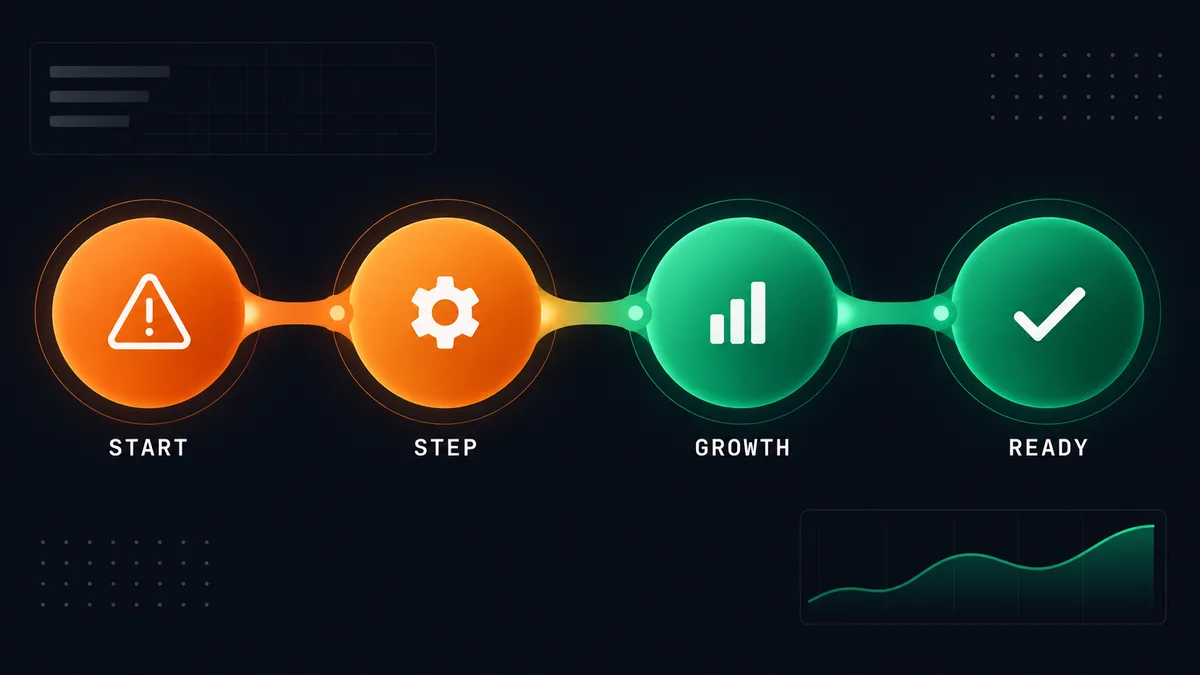
Before H3A, there was TechDots, a no-code development agency doing real work for coaches and course creators, mostly across the US and UK. Around March 2026, the main lead channel the business ran on changed underneath it. A platform-level shift in how freelancers got matched to clients meant proposals that used to land started going nowhere. Invites dried up. Revenue genuinely dropped, and it happened fast enough to feel like a shock, not a slow drift.
There’s a real irony worth sitting with here, told plainly rather than as a marketing line: an AI-driven change to a matching algorithm is what forced the pivot that eventually led to building an AI automation business. That wasn’t the plan. It was just what actually happened, and it’s a real part of why H3A exists in its current form rather than as some other kind of business entirely.
The trigger arrived at the same time the person managing that specific channel left the company, which meant there wasn’t a spare set of hands already available to absorb the shock. It had to be solved directly, by whoever was left holding the actual problem.
Why hiring was the first real attempt, not automation
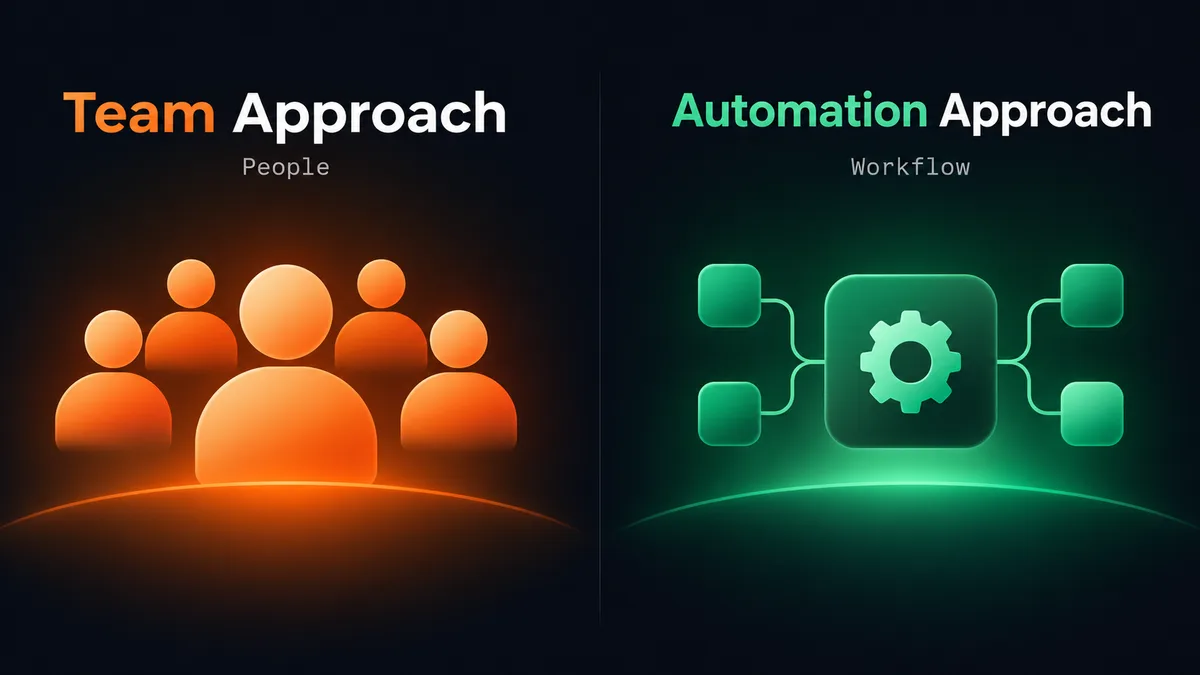
The obvious first response to a revenue drop is the one most businesses reach for: build a team to go find and pitch new business. That’s exactly what happened first, not an automation build, a hiring effort. Round after round of interviews. Time spent training people up. The honest, unglamorous work of trying to solve a growth problem the traditional way, before ever touching an automation tool.
This detail matters more than it might seem for understanding why H3A exists the way it does today. A founder who reached for automation first, without ever genuinely trying the conventional fix, would have a much weaker basis for claiming done-for-you automation is actually the better answer. The credibility here comes specifically from having tried the other path first, seriously, not as a formality to dismiss before reaching the preferred conclusion.
The real story isn’t “an automation founder discovered automation.” It’s “someone tried the conventional fix first, and it genuinely didn’t work.”
Why the hiring fix genuinely stalled
Weeks into building that lead-generation team, there was still no paying client closed, and it was genuinely unclear whether the strategies being tried were even working at all. That’s a specific, recognizable kind of stuck: doing everything right on paper, interviewing carefully, training people up, and still ending up at square one, watching a deadline slip because someone you were counting on didn’t come through, with no real lever left to pull except “try hiring again.”
This is a genuinely common pattern for small businesses and solo operators, not a unique failure. Real research on founder-led outbound confirms the same underlying tension: building a full hiring-based function to solve a growth problem is genuinely hard for a small team to pull off reliably, and plenty of founders hit the same wall before finding a different real answer.
Recognizing that this wasn’t a personal failure, but a structural mismatch between the size of the team and the size of the fix being attempted, is a real part of why H3A exists as a done-for-you company rather than a hiring consultancy. The problem was never a lack of effort or a lack of good candidates. It was that a hiring-based fix needs real time to mature, weeks of ramp-up before anyone can judge whether it’s actually working, and a business under real revenue pressure often doesn’t have that much runway to spare.
The real turn, and why it changed everything
AI automation wasn’t a cold discovery at this point, it had been a “maybe eventually” idea sitting in the background. The stalled hiring effort is what turned that into a “try it now” decision. A small internal tool came first, mostly plumbing to get real lead data organized, not the interesting part of the story. What actually changed everything was building an outreach automation that ran the sequencing and follow-up on its own, without depending on a team member showing up and delivering consistently.
Once it was running for real, the results were immediate and measurable in a way the hiring effort never had been. Calls started booking. Meetings started happening. Real clients started converting. That gap, between weeks of a struggling team effort producing nothing and one automated system producing real results almost immediately, is the actual proof point the whole business ended up built on.
There was also a broader, real anxiety sitting underneath this specific moment, not abstract, already visibly happening in the same income that had just taken the hit: the sense that AI was reshaping how freelance and service work got won in the first place. Rather than treat that shift as a threat to worry about from the sidelines, it became the direct reason to move: if the work was going to change anyway, better to be the one building with the change than the one being displaced by it.
That’s the real, honest version of why H3A exists when it does, not a five-year plan, a direct response to watching an old channel get visibly harder while a new approach had already proven it worked, in real numbers from the founder’s own business.
Why this became a done-for-you philosophy, not just a tool
This is the part of the story that explains H3A’s actual pricing model, not just its origin. The lesson from the hiring failure wasn’t “automation beats hiring.” It was more specific than that: the real problem was never a lack of tools or a lack of effort, it was a lack of something that would just run reliably without depending on any one person showing up. A self-serve automation platform solves the tools problem but reintroduces a version of the same dependency, now it depends on someone internally learning and maintaining the platform instead of a hire showing up.
Done-for-you automation is the version of the fix that actually matches what the original problem needed: an outcome that runs, not another thing to manage. That’s not a pricing preference dressed up as philosophy, it’s the direct lesson from watching a team-based fix and a tool-based fix both fall short of what a truly hands-off, reliable system provides.
Why H3A exists as a service, not a software product
A lot of companies that hit the same real problem would have built a self-serve SaaS product and sold access to it. That was a genuine option, and it’s the path most of the competition actually took. It wasn’t the right fit here, because the original lesson was never “the tools weren’t good enough,” it was “nobody had spare hours to configure and babysit a tool.”
Selling a self-serve product would have handed that exact same time burden straight to every future customer, recreating the original problem instead of solving it. Why H3A exists as a done-for-you service instead of a licensed tool comes directly from taking that lesson seriously rather than defaulting to whatever business model is easiest to scale.
What this actually means for how H3A works today
Every H3A automation follows the same real pattern this first one did: built for Ahmad’s own business first, proved out for real, before ever becoming something sold to a client. Email Outreach Automation was the direct answer to the hiring frustration described above. Every other automation in the catalog, content, social outreach, SEO, community management, followed the same real shape: a genuine operational problem Ahmad hit himself, solved by building it, proven before it was ever packaged.
That’s the real reason H3A doesn’t sell a self-serve platform. The founding problem was never “we need better software,” it was “we need this to just work without depending on one more person or one more tool we have to babysit.” Done-for-you is the honest answer to that, not a sales angle layered on top of it.
Why every automation gets proven before it’s sold
There’s a second real pattern worth naming explicitly, since it’s a direct consequence of why H3A exists the way it does. Every automation in the current catalog was built for an internal, real business need first, run for real, and only packaged into a sellable service once it had genuinely proven itself. That’s not a marketing claim about “eating your own cooking,” it’s the literal, repeated mechanism by which the company grows: hit a real operational problem, build the fix, prove it works, then offer the same fix to other businesses hitting the same real problem.
This matters because it changes what a prospective client is actually buying. It isn’t a hypothetical service built to a spec sheet. It’s the same real system already keeping a real business running, offered to a new business facing the same real gap.
What to do next
If you’re recognizing a version of this same pattern in your own business, a hiring attempt that’s stalling, or a tool stack that needs someone’s real ongoing time to keep running, that’s exactly the problem H3A was built to solve, starting with the same automation that solved it for us. A short call is the fastest way to find out if the same fix applies to your real situation.
Why H3A exists isn’t really the interesting part of this story on its own, what it actually built because of that origin is. The same real fix that pulled one business out of a stalled hiring effort is the one now offered, unchanged in its core logic, to any business facing a real version of the same problem.
Frequently asked questions
Does H3A still recommend hiring a team for growth in some cases?
Yes, honestly. Hiring is the right answer for plenty of real situations. The lesson behind why H3A exists isn’t “never hire,” it’s that a hiring-based fix and an automation-based fix solve different real problems, and knowing which one your actual situation needs matters more than picking a side on principle.
Was TechDots shut down after this?
No. TechDots continues to operate as its own no-code development agency. Why H3A exists as a separate, distinct brand rather than a division of TechDots traces back to seeing another business run two agencies side by side under distinct branding, and deciding to do the same.
Is Email Outreach Automation still the same system used in this original story?
Yes, in the sense that matters. It’s the same real approach, proven on H3A’s own pipeline first, that now runs as the client-facing Email Outreach Automation service, refined since but built on the same real foundation.
Did every other H3A automation follow the exact same story?
The shape repeats, though the specific trigger differs each time. Every automation in the catalog started as a real operational problem in Ahmad’s own businesses, solved by building it directly, proven before it was ever sold. The Upwork-and-hiring story above is specifically how the first one, Email Outreach, came to exist.
Why share this story publicly instead of just the sales pitch?
Because the reasoning behind done-for-you automation only actually holds up if the origin is real. H3A’s real numbers and named gaps approach on every other page applies here too: the story is true, verifiable in shape if not in every private detail, and it’s the honest reason the pricing model looks the way it does.
The real takeaway: H3A exists because a hiring-based fix to a real business problem stalled, and building the fix directly is what actually worked. That’s the real reason the company sells done-for-you automation instead of a tool you have to run yourself, it’s the same fix that worked the first time, offered the same way to every business facing a version of the same real problem.