A solar installer can close three or four strong commercial jobs in a quarter and still watch the pipeline go quiet the week after the last one gets signed. Residential leads keep trickling in from paid ads, referrals, and a decent Google Business Profile. The larger commercial contracts, an office roof, a warehouse, a multi-tenant property, almost never show up the same way.
Nobody searches Google for a commercial solar installer the way a homeowner searches for a residential quote. Those contracts come from a property manager, a facilities director, or a building owner who has to be found and reached directly. This piece looks at how solar installers actually get in front of that buyer, why most published solar marketing advice skips past this part of the business entirely, and where email outreach automation for solar installers fits once an owner decides that reaching this buyer should not depend on who happens to call back first.
Commercial solar contracts come from property managers, facilities directors, and building owners, not from someone typing a search query. Solar installer lead generation for this buyer runs on direct cold outreach and trade referrals, the same B2B solar leads channel other property-facing trades already use, not on ads or reviews. A steady outreach system, kept running every week, is what turns that channel into a repeatable source of signed jobs.
On This Page
- Why Most Solar Lead Advice Skips the Commercial Side
- The Real Channels: Cold Outreach to Facility Managers and Trade Referral Partners
- Why One Email Rarely Gets a Reply From a Property Manager
- What Happens When Nobody Owns the Follow Up
- Doing It Yourself vs Having It Done For You
- How Email Outreach Automation Fits a Solar Installer’s Commercial Pipeline
- How to Start Building This Yourself This Month
- Why Consistency Beats a One Time Pitch
- What to Do Next
- FAQ
Why Most Solar Lead Advice Skips the Commercial Side
Almost everything published about solar installer lead generation is written for the residential homeowner sale. A detailed solar marketing guide notes that the average residential solar buyer researches for three to six months before requesting a quote, comparing installers, reading reviews, and discussing the decision with family, which is exactly why that guide spends most of its length on Google Business Profile optimization, local SEO, and review timing. (Source: SurgePV)
That same guide draws a clear line most solar content never mentions: commercial solar marketing is, in its own words, fundamentally different from residential. It names the real commercial channels directly, LinkedIn outreach, cold email to facilities managers, and referrals from accountants and energy consultants, and tells readers not to mix the two approaches in early stage marketing. A homeowner and a property manager are different people, found in different places, deciding for different reasons. (Source: SurgePV)
Most of what does exist under a search for solar installers and cold email is not written to help an installer run outreach of their own either. One widely indexed cold email generator built for pitching solar panel installers walks through subject line tricks and personalization tips aimed at a reader trying to sell something to a solar company, not a solar company trying to reach its own commercial buyer. (Source: Copyfactory)
That gap is the actual story. The tactics for reaching a property manager or a facilities director are not secret or unusual, they are the same researched, sequenced, followed up outreach every B2B service business runs. Almost nothing published actually walks a solar installer through building that system for their own commercial pipeline.
The Real Channels: Cold Outreach to Facility Managers and Trade Referral Partners
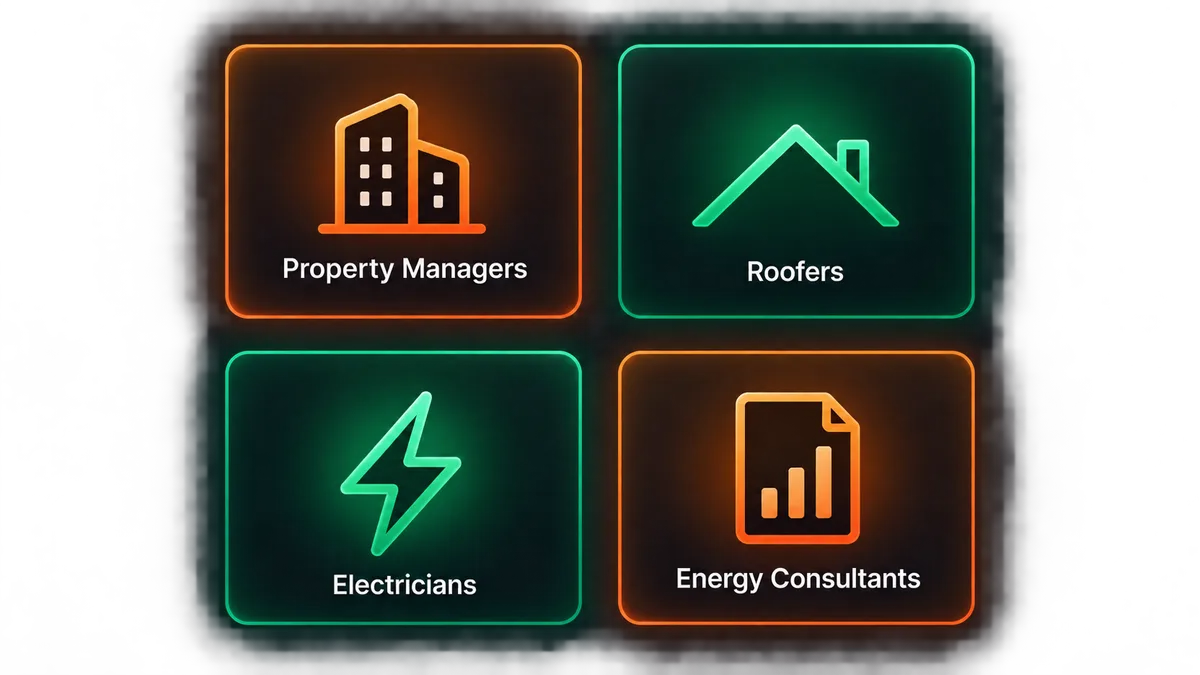
Two real channels carry the commercial side of this business, and a solar installer usually already has a foothold in both without ever treating either one as a system. The first is direct cold outreach to the people who actually control a commercial roof or a business’s energy decision: property managers, facilities directors, and building owners running offices, warehouses, retail centers, or multi-tenant properties.
The second is the trade referral layer SurgePV names specifically for this niche: roofers, electricians, and the accountants and energy consultants who advise a business on capital spending. A roofer replacing a commercial roof is already standing in front of the exact building owner who should be hearing about solar at the same time, and an energy consultant reviewing a client’s utility costs is already having the conversation a solar pitch fits naturally into. (Source: SurgePV)
Neither channel produces a signed contract from one message. A property manager overseeing a dozen buildings gets pitched constantly and deletes anything generic on sight. A roofer or energy consultant needs more than one conversation before sending real referrals, the same way any professional relationship earns trust over repeated contact rather than a single introduction.
A roofer, an electrician, and an energy consultant each meet a building owner with an energy decision in front of them before the solar installer does. The installer who has an actual relationship with a handful of them gets the introduction. The one who has only met them once does not.
Why One Email Rarely Gets a Reply From a Property Manager
A single cold email to a property manager, sent once and never followed up, behaves almost exactly like a Facebook lead ad that never gets called back. SurgePV’s own research on inbound leads makes the underlying point directly: speed and follow through decide outcomes far more than the first message does, and leads that do not get a fast, consistent response convert at dramatically lower rates than ones that do. (Source: SurgePV)
Outbound works the same way in reverse. Speed to lead solar sales advice usually covers calling back an inbound form fast. The commercial outreach version of that same discipline is contacting the right property manager consistently, with a real follow up sequence, rather than sending one message and waiting to see what happens.
A property manager who gets a generic solar pitch once has no reason to remember the sender’s name a month later. A property manager who gets a short, specific opener, a genuine value follow up referencing their actual building type, and a clean final follow up over several weeks starts to recognize a name that keeps showing up for a real reason, not a company blasting a list.
What Happens When Nobody Owns the Follow Up
Most solar installers already know roofers and electricians worth partnering with, and most have already sent at least one cold email to a property management company at some point. The tactics are not the missing piece. What is missing is someone who owns running those two channels every week, the same way a crew owns showing up to a job site every day.
An owner running three or four installs a month has no spare hours to research twenty property managers, write a sequence for each trade partner, track who replied, and follow up again next week. So the outreach happens in one good burst after a slow month, then stops the moment three new jobs land and the crew needs attention again.
That stop and start pattern is exactly how a commercial pipeline stays thin. A property manager contacted once, a roofer pitched one lunch, a referral relationship that never gets a second conversation, none of that compounds into anything. It is a missing owner for the follow up, not a missing idea.
Doing It Yourself vs Having It Done For You
Running commercial cold email and trade partnerships by hand is entirely possible, and plenty of solar companies have built real commercial books of business doing exactly that. It takes an owner, a salesperson, or an office manager treating outreach as a standing weekly task rather than something squeezed in between site visits and permit paperwork.
The honest tradeoff is time and consistency. A person doing this alongside other responsibilities tends to keep it up for a few weeks, then let it slide the moment the schedule gets tight, which is the same pattern that keeps commercial pipelines thin in the first place. A system built to run the research, the sequencing, and the follow up automatically does not get distracted by a busy install week, because nobody has to remember to open the list and send the next message.
Neither approach is wrong. The real question for a given installer is whether the bottleneck is finding the right property managers and trade partners, or actually following up with them on a consistent schedule once they are found. Those are two different problems with two different fixes.
How Email Outreach Automation Fits a Solar Installer’s Commercial Pipeline
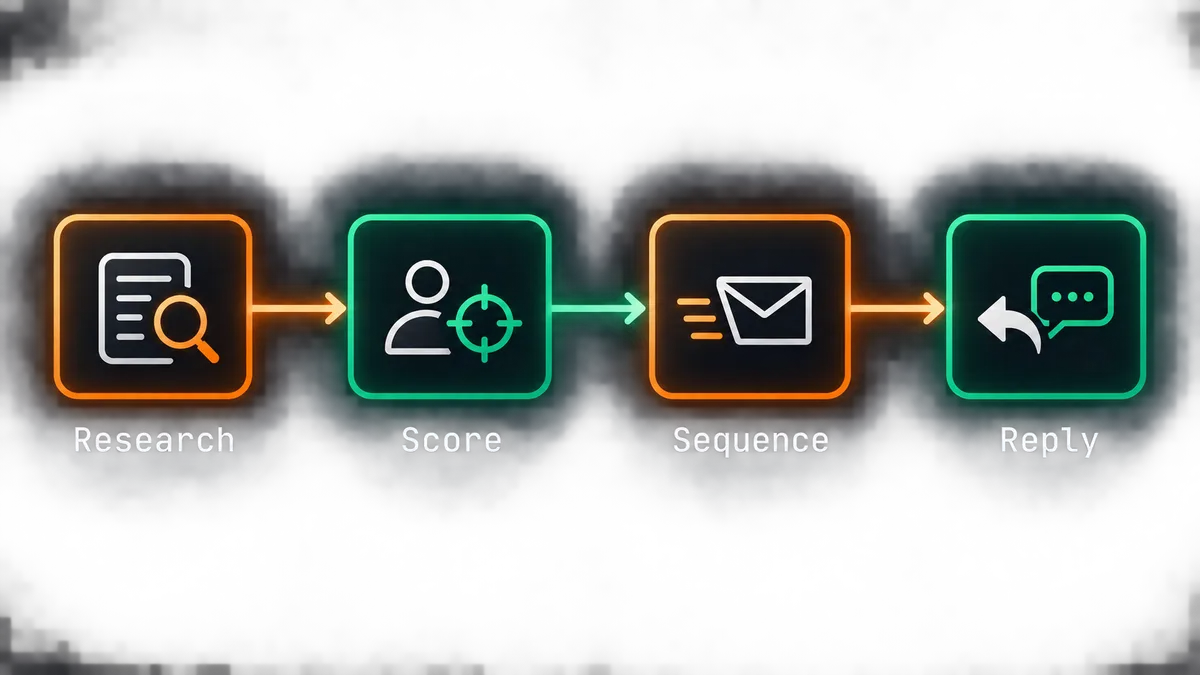
Email outreach automation for solar installers works like this inside H3A’s own system. This is where H3A’s Email Outreach Automation fits a solar installation business going after commercial contracts. Instead of an owner researching property managers, facilities directors, and trade partners between job sites, every contact gets researched and scored against who the business actually wants to work with before a single message goes out, not scraped from a directory and blasted with a form email.
A real multi step sequence, an opener, a value follow up, a direct follow up, and a clean close, goes out automatically at the right intervals, so a property manager or an energy consultant never goes cold just because the owner got pulled onto a job site for a week. Reply and bounce handling stop a sequence the moment someone responds, so nobody sends an awkward follow up to a contact who already replied, and the owner is notified the moment a real reply comes in rather than finding out days later.
Controlled daily sending limits and proper setup protect the sending domain’s reputation, which matters for commercial outreach the same way it matters for any cold email channel, since a flagged domain stops reaching anyone’s inbox at all. The dashboard shows total contacts in the pipeline, sequence progress, and a real reply rate, a lead by lead breakdown an owner can actually check, not a vague status that says a campaign is running.
It runs on real, published pricing: $249 to set up and $149 a month for up to 1,000 contacted leads, with additional capacity available in blocks of 500 for $50 a month each, and a 7 day trial with a full refund if it is not working the way it should.
How to Start Building This Yourself This Month

A solar installer does not need an automated system running on day one to start closing the gap on the commercial side. The groundwork matters first, and an owner can do all of it without new software:
- Write down the real names. Five to ten property managers, facilities directors, or commercial building owners in the service area, plus the roofers, electricians, and energy consultants most likely to meet a business owner with an energy decision in front of them.
- Note which buildings are already a fit. Flat commercial roofs, high daytime energy use, or a business that has mentioned rising utility costs are each a real reason for the first message, not a generic pitch sent to anyone with a roof.
- Decide what the referral arrangement actually is. A finder’s fee per qualified introduction, stated clearly to a roofer or energy consultant, works better than a vague thank you nobody remembers to act on.
- Send something specific, not a form letter. Reference the actual property, a recent renovation, or a shared client, not a generic subject line about going green.
- Follow up on a real schedule. One email rarely gets a reply from a property manager running a dozen buildings. A short sequence spaced out over a few weeks, each message with a genuine reason to write again, is what actually starts the conversation.
- Keep a simple record of who replied and who did not, and keep going. A commercial pipeline built this way looks thin after week one and very different after two quarters of steady contact.
Why Consistency Beats a One Time Pitch
Every real commercial solar account traces back to the same pattern from a different angle. The property manager who calls first when a new roof needs panels is not calling first because of one good email eighteen months ago. The roofer who sends two or three referrals a year is not sending them because of a single lunch meeting.
Both keep reaching out because the installer kept showing up in some small, consistent way long after the first conversation stopped feeling new, a quarterly check in, a note when a relevant building comes up for sale, a follow up that actually arrived when it was promised.
A single cold email to a property manager rarely changes a quarter. Ten real contacts, each followed up with on schedule for six months straight, changes a year.
This is also why commercial outreach and the residential-focused tactics in most solar marketing guides are not competing priorities. Local SEO and a strong Google Business Profile reach the homeowner who is already searching today. Direct outreach and trade partnerships reach the commercial buyer before a search ever happens, through the installer’s own name showing up at the right moment.
What to Do Next
Start with the list from the checklist above: five to ten real property managers, facilities directors, or building owners, plus the roofers, electricians, and energy consultants already crossing paths with the business. Decide honestly whether the real bottleneck is finding those names or following up with them consistently once they exist, since those call for different fixes.
Other property-facing trades are already running this same playbook for their own version of a steady commercial pipeline. H3A’s piece on how plumbers win property management contracts covers the same underlying problem from a different trade: a business that depends on bids and referrals needing a steady flow of the right contacts, solved the same way, with real research, a real sequence, and a system that keeps it moving after the first week.
FAQ
Do I need to stop running paid ads or local SEO to do this?
No. Paid ads and local SEO mainly reach the residential homeowner who is already searching. Commercial solar property manager outreach reaches a different buyer at a different moment, and running both tends to produce a steadier pipeline than either channel alone.
Why doesn’t the usual solar lead generation advice cover this?
Most published solar marketing content is written around the residential sale: reviews, local SEO, and paid ads aimed at a homeowner researching for months before requesting a quote. Commercial buyers are found and reached directly, a different channel most guides never address.
Will cold email to a property manager feel like spam?
Not if the message is specific to their actual building and situation rather than a generic form letter. A real outreach sequence researches each contact first and references something real about their property before the first message goes out.
What if I don’t already have a list of property managers or trade partners?
That is the normal starting point. A short list of commercial properties in the service area, plus the roofers, electricians, and energy consultants already nearby, is enough to begin, and the list grows as relationships develop.
How much does email outreach automation for solar installers cost?
H3A’s Email Outreach Automation is $249 to set up and $149 a month, covering up to 1,000 contacted leads a month, with additional capacity available in blocks of 500 for $50 a month each.
Is there a trial before committing long term?
Yes. A 7 day trial runs after go live, with a full refund if it is not working the way it should.
A solar installer with a quiet patch on the commercial side is rarely short on real contacts. The property managers, facilities directors, roofers, and energy consultants are already reachable, often one message away, each one a real source of the next contract without a dollar spent on ads. What is usually missing is the follow up that turns one good conversation into an ongoing source of business, and that is exactly the gap email outreach automation for solar installers is built to close.