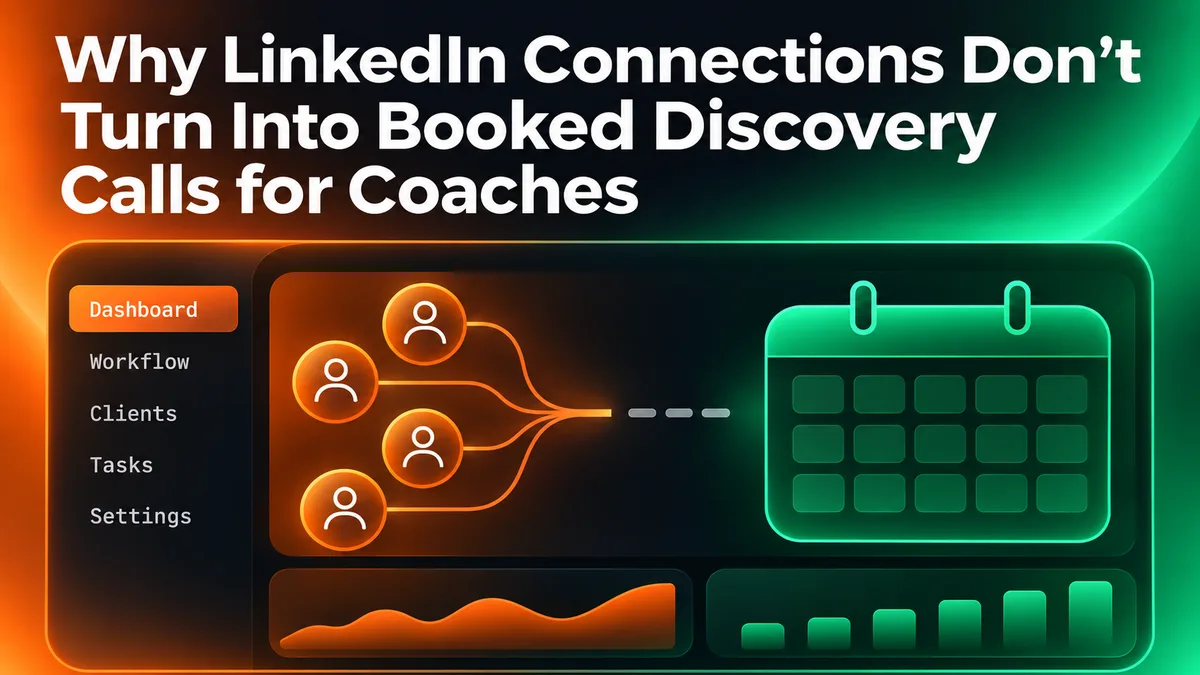
A business coach we talk to recently pulled up their LinkedIn and counted. Two hundred and eleven accepted connections in the last ninety days. Four discovery calls. That gap is a textbook case of LinkedIn connections not converting to clients, and it is where most coaches lose the channel entirely, not at the connection stage where everyone assumes the problem lives.
- What happens after a LinkedIn connection accepts
- Why LinkedIn connections not converting to clients is a sequencing problem
- The message sequence that moves a connection toward a call
- What happens when this step gets automated badly
- What a done-for-you LinkedIn nurture sequence adds
- A checklist before you trust any follow-up sequence
- Why this matters more for coaches than for most LinkedIn users
- What to do next if your connections are going quiet
- FAQ
What happens after a LinkedIn connection accepts
Most coaching advice on LinkedIn stops at the connection request. Write a good one, get it accepted, and the assumption is the hard part is over. In practice the accept is the easiest step in the entire chain. Someone glances at a profile picture and a headline, decides there is little cost to connecting, and taps accept without much thought at all.
That is a weak signal of interest, not a strong one. The person has not read your posts, has not thought about whether they need a coach, and in most cases will forget the connection happened within a day. What happens in the days right after that accept decides whether the connection turns into anything or quietly joins the hundreds of other names sitting in a list nobody ever messages again.
A connection that sits untouched for two weeks is close to dead. LinkedIn’s own feed buries older connections fast, and the person has likely connected with a dozen other people since. Coaches who send one message the day of the accept and nothing else are not running a sequence. They are sending a single flare and hoping it lands.
Why LinkedIn connections not converting to clients is a sequencing problem
The real gap sits between two moments: the accept, which costs the other person nothing, and the booked call, which costs them an actual decision about their time and their problem. Everything that happens between those two moments either builds enough trust to close that gap or it does not. Most coaches have no plan for that middle stretch at all.
Two habits create the gap. The first is pitching too early. A message that opens with your offer, your program, or a link to book a call, sent to someone who accepted a request an hour ago, reads as exactly what it is: a sales message to a stranger. The second is going silent. A coach sends one friendly note, gets no reply, and assumes the person is not interested. Most people are not ignoring you on purpose. They are busy, and a single message is easy to miss in a crowded inbox.
Research on this exact gap backs up what a busy calendar makes hard to see. Forbes contributor Jodie Cook, who covers LinkedIn strategy for professionals, has written that converting connections into clients consistently takes a deliberate system rather than one-off outreach, since a connection by itself carries almost no commercial weight until something builds on top of it.
The message sequence that moves a connection toward a call
The sequence that closes this gap is short, not clever. Four touches, each with one job, spaced a few days apart, stopping the moment a reply comes in.
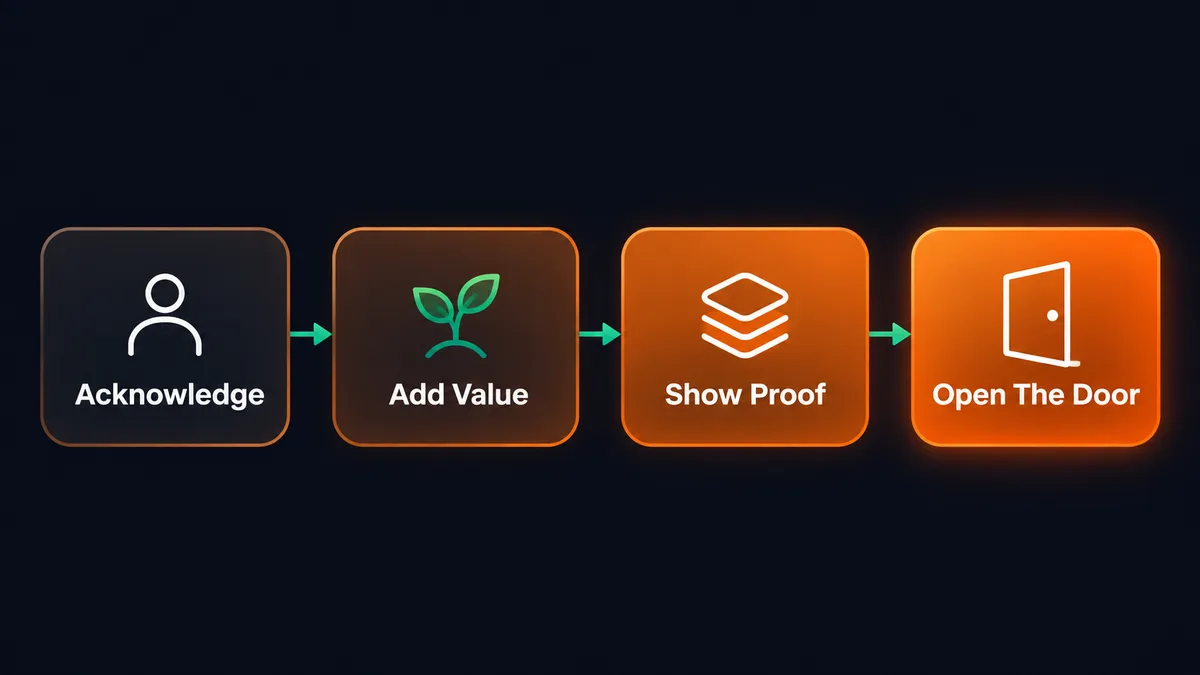
- The acknowledgment. A short, genuine thank-you sent the day of the accept. One or two sentences, nothing more. This message has one job: confirm you are a genuine person, not a bot, and close the loop on the connection itself.
- The value message. Sent three to four days later, with no ask attached. A specific observation about a pattern you see in clients like them, a short resource, or a direct question about a problem you know they likely have. This is where you show you understand their situation before you mention your own.
- The proof touch. A few days after that, something concrete: a short result you have produced for a similar client, described honestly, without a number you cannot back up. This is the message that answers the unspoken question of whether you know what you are doing.
- The door-open message. A soft, specific invitation. Not “let’s hop on a call,” but a direct question tied to what they told you earlier in the thread, with an easy way to say yes.
Four messages is close to the ceiling, not a floor to build past. Coaches who keep messaging after a third unanswered touch start to look less like someone offering value and more like someone who will not take a hint. If someone has not responded after the fourth message, the better move is to stop, not to escalate.
Spacing matters as much as content. A message sent the same day as the last one reads as pressure. Three to four days between touches gives the relationship room to feel organic instead of scripted, while still keeping you visible before the connection goes cold entirely.
What happens when this step gets automated badly
A fair number of coaches who hear “automate your LinkedIn follow-up” picture exactly the wrong thing: a tool that fires the same four messages at every single connection on a fixed clock, no matter what that person said or did not say. That version of automation exists, it is common, and it is exactly why LinkedIn connections not converting to clients becomes a permanent pattern instead of a fixable one, since the robotic, mail-merge feeling makes a recipient tune out by message two.
Some voices in the automation space argue against automating this step at all. WarmLine, a LinkedIn outreach tool itself, makes a case worth taking seriously in its own published guidance on whether LinkedIn automation is safe: the tool matters less than the behavior it produces, and a sequence that does not branch based on what the other person says will eventually read as mechanical no matter how it is built. That is a fair objection to a badly built sequence, not a reason to avoid sequencing at all.
The fix is not to abandon structure. It is to make sure the structure branches. A reply has to stop the sequence immediately, every time, so a person who already answered never receives a scripted follow-up that ignores what they just said. A sequence also needs to tell the difference between an actual reply and an automatic “away” message, since treating the two the same way is exactly the kind of mistake that makes automation obvious and unwelcome.
Direct competitors in this space, including Quicklead’s own LinkedIn lead generation guidance for coaches, make a related point: the strongest version of this sequence targets a specific moment in someone’s career or business, not a generic job title, and avoids promising a result nobody can guarantee. Those are the right instincts. Neither Quicklead nor GTM Bud, the other tool we found marketing this exact connection-to-call mechanic to coaches, frames it as a fully managed, done-for-you service. Both are platforms a coach still has to configure and run themselves.
What a done-for-you LinkedIn nurture sequence adds
We wrote about the first two stages of this funnel in our earlier guides: how coaches can run LinkedIn outreach without prospecting every day, and how to get discovery calls without cold pitching. Both cover getting the connection request right and avoiding the pitch-too-early mistake. This is the stage that comes after both of those are already working: a connection has accepted, and now someone has to run the four-message sequence, every day, for every new connection, without losing track of who said what.
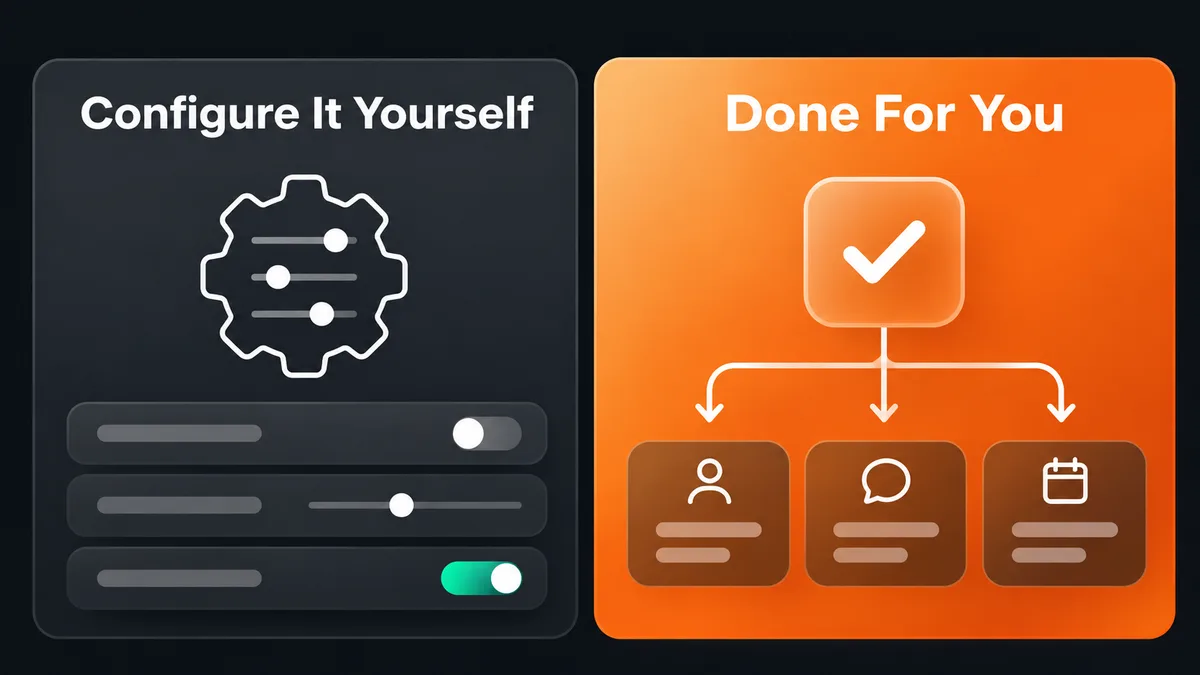
That tracking problem is where most coaches fall down, not the writing. Running four staged messages for one new connection is manageable. Running it correctly for forty new connections a week, each at a different stage, each needing the sequence paused the moment they reply, is a scheduling job a full coaching calendar has no room for.
Through our LinkedIn and Instagram outreach automation, this exact nurture sequence runs for you. Each new connection moves through the acknowledgment, value, proof, and door-open stages automatically, on the spacing described above, and the sequence stops the instant a genuine reply comes in. The system can tell a genuine reply apart from an automatic away message, so you are only notified when there is a real conversation to have, not a false alarm. A dashboard shows exactly where every connection sits in the sequence, so nothing depends on your memory.
Setup is a flat $299 one time, with a $149 monthly fee for one platform and a $50 monthly add-on if you want both LinkedIn and Instagram running the same way. There is a 7-day trial after go-live, with a full refund if it is not working the way it should. We are not asking you to configure sending limits or guess at safe pacing. That part is already handled, the same way it would be if you hired someone to run this by hand, except it runs every day without a gap.
A checklist before you trust any follow-up sequence
Whether you write this sequence yourself, hand it to a virtual assistant, or bring in a done-for-you system, the same questions decide whether the problem of LinkedIn connections not converting to clients turns around or just keeps repeating:
- Does the first message after accept avoid a pitch entirely, or does it try to sell before the relationship exists?
- Is there a genuine value message before any ask, something specific to that person’s situation, not a generic resource sent to everyone?
- Does a reply stop the sequence immediately, so nobody who already answered gets a scripted message that ignores what they said?
- Can it tell a genuine reply from an automatic away message, so your attention goes to the conversations that matter?
- Is the spacing between messages a few days, not same-day, so the sequence feels like a person following up, not a timer firing?
- Does it stop after three or four touches, instead of escalating into messages that read as pressure?
Why this matters more for coaches than for most LinkedIn users
A software sales rep selling into a large company has dozens of colleagues who can pick up a cold conversation if one rep lets it go quiet. A coach selling their own time has exactly one person running every connection, every follow-up, and every call. When the sequence after the accept does not exist, there is no backup system catching the people who fall through.
Coaching is also a trust-first sale in a way plenty of other LinkedIn outreach is not. Nobody hires a coach after a single message, no matter how well written. The sequence of touches is not a sales tactic bolted onto the relationship, it is the relationship, built in small, visible steps before a call is ever on the table. Skipping that sequence does not just lose the lead, it skips the exact proof of judgment and care a prospective client is evaluating.
We have now built and run more than 30 automations across 300 or more client projects, and the same pattern shows up across almost every one of them: a genuine prospect, lost not because the fit was wrong but because nobody followed up with enough structure to carry the relationship past the first hello. For business coaches specifically, LinkedIn connections not converting to clients is rarely a targeting problem. The LinkedIn connection itself is rarely the hard part. The days right after it are.
What to do next if your connections are going quiet
Start with an honest count. Open your LinkedIn connections from the last ninety days and check how many got a second message after the first one. Most coaches are surprised by how small that number is, and that gap is the entire explanation for a channel that looks busy but is not producing calls.
From there, pick a lane. Write out the four-touch sequence above and run it by hand for your next twenty new connections, tracking who replies and at which stage. That will tell you fast whether the sequence itself works for your specific audience before you hand it to anyone or anything else.
If the honest answer is that you do not have twenty spare minutes a day to track that, every reply, and every stage, that is exactly the gap our LinkedIn outreach automation is built to close, running the sequence described above in the background while you keep the conversations that need you.
FAQ
Why are my LinkedIn connections not converting to clients?
In most cases it is a follow-up problem, not a targeting problem. An accepted connection means someone was willing to say yes to something low cost. It does not mean they trust you yet. Coaches who pitch immediately or send one message and stop lose the relationship in the gap between those two points.
What should I say after a LinkedIn connection accepts?
Start with a short, genuine thank-you with no ask attached. Follow a few days later with something useful and specific to that person’s situation, not a pitch. Save any mention of your offer for later in the sequence, after you have shown you understand their problem.
How many follow-up messages should I send after connecting?
Three to four, spaced a few days apart, stopping the moment someone replies. Beyond that, continued messages tend to read as pressure rather than genuine interest, and the relationship is better served by moving on.
Can this LinkedIn follow-up sequence be automated without feeling robotic?
Yes, if the sequence branches based on what the person does. A reply has to stop the sequence immediately, and the system needs to tell a genuine reply apart from an automatic away message. A sequence that fires the same four messages regardless of what comes back is what creates the robotic feeling, not automation itself.
Is it safe to automate LinkedIn follow-up messages?
Risk depends on how the system connects to your account and how conservatively it paces sending, not on the fact that messages are automated at all. A system built on an official connection with careful pacing carries far less risk than a browser script clicking through the platform on your behalf.
How much does a done-for-you LinkedIn nurture sequence cost?
Our LinkedIn and Instagram outreach automation is $299 for setup and $149 per month for one platform, with a second platform available for an extra $50 per month. There is a 7-day trial with a full refund if it is not working.
The connection was never the hard part. The four days after it decide whether a coach’s LinkedIn list turns into a calendar full of discovery calls or a few hundred names that never hear from you again. Run the sequence by hand, hand it to someone else, or let it run itself. The one option that reliably fails is leaving the gap open and hoping the right people follow up on their own.