OCD and anxiety coaches build a practice on trust the moment a lead first interacts with them, often before a sales conversation even starts. The audience is already alert to language that sounds clinical, pushy, or like a stranger is selling them something they did not ask for. A connection request that reads as a sales message gets ignored or reported, and a coach who runs that risk too many times trains their own audience to tune them out, not just the one message that got it wrong. Most coaches in this niche still rely on referrals and a slow trickle of social posts. Real client sessions already fill the calendar, and there is little time left over to prospect.
This guide covers how OCD and anxiety coaches get more clients without cold pitching: a short message sequence built around a check in instead of an offer, the test that tells the two apart, and where referrals and outreach can run together instead of competing for the same hour of your week. None of it depends on sounding clinical or making a claim about what coaching can treat. It depends on sounding like a person who noticed something true about the other person first.
Quick answer: OCD and anxiety coaches get more clients without cold pitching by opening with a genuine check in instead of an offer, waiting for the other person to ask about coaching before naming it, and keeping every message clearly separate from clinical or therapy language. Referrals still do a lot of the work in this niche, and outreach works best alongside that, not instead of it. A done for you LinkedIn outreach setup can run that sequence for you, but the sequence itself works whether you send every message yourself or hand it to a system.
What’s covered
- How OCD and anxiety coaches get more clients without cold pitching
- Is this a check in or a pitch? The test this audience notices first
- The four message sequence that replaces a cold pitch
- Where referrals still fit alongside LinkedIn outreach
- A checklist for judging your own outreach messages
- Why this matters more for a non therapy coaching practice
- What to do next this week
- FAQ
How OCD and Anxiety Coaches Get More Clients Without Cold Pitching
Cold pitching fails with this audience faster than almost any other niche, because the people on the other end of the message are already paying close attention to tone. A message that opens with “I help people manage anxiety, want to book a call” reads as a diagnosis wrapped in a sales pitch, even when that is not the intent. The result is not just a lower reply rate. It is a blocked account, a reported message, or a lead who now connects your name to exactly the kind of pushy outreach they were trying to avoid in their own life.
Clients who go on to book sessions come from a different path: a specific, true observation about the person, a real question, and coaching mentioned only once the other person brings it up. That is closer to how a referral conversation already starts. A friend mentions a coach almost as an aside, and the interested party asks the follow up question themselves. Warm outreach for coaches just starts that same pattern on purpose instead of waiting for someone to remember you at the right moment.
The coaches who struggle most with ocd coach marketing on LinkedIn are usually skipping straight to the identity and the ask in the same message. The ones who book calls consistently keep the first few messages free of any coaching language at all, individual or workplace, and let the other person ask the next question.
Is This a Check In or a Pitch? The Test This Audience Notices First
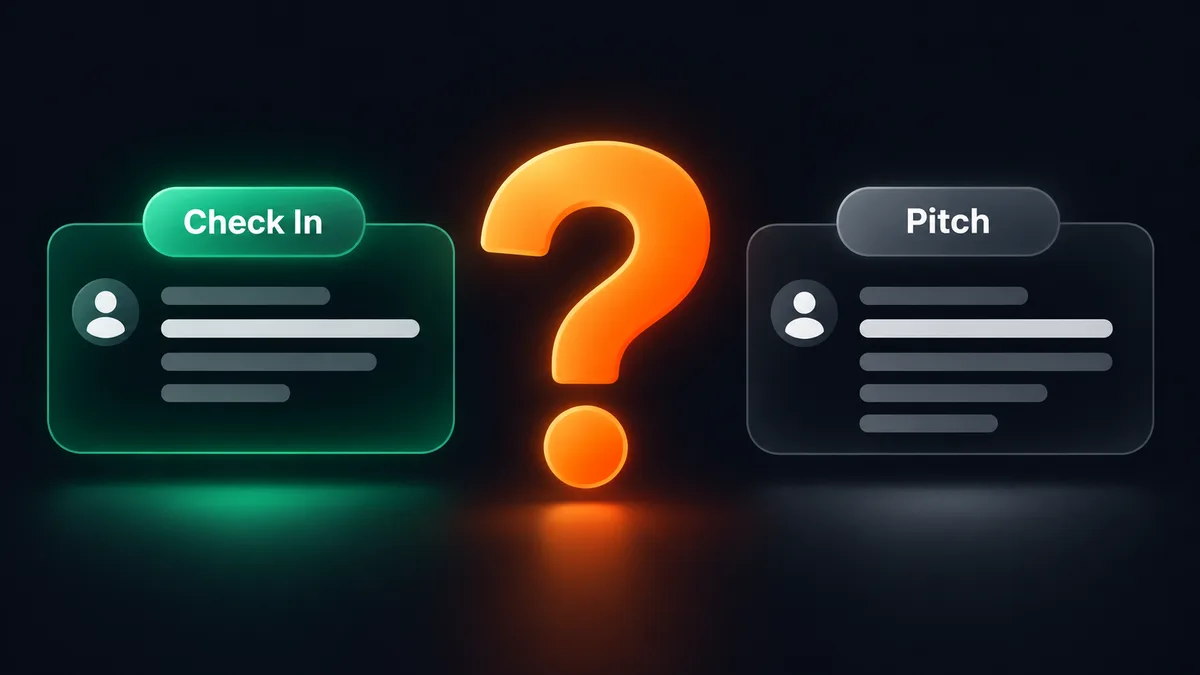
Before sending a message, run it through one test: read it back and ask what happens if the other person never once mentions anxiety, OCD, or coaching. If the message still makes sense as something you would say to a new contact at a conference, it passes. If removing every trace of the coaching angle leaves nothing behind, it was a pitch wearing a check in’s clothing.
This test matters more here than in most niches, because the audience is unusually good at spotting a disguised sales message. Many of the people a coach reaches out to have already dealt with a flood of hollow self care content, or a wellness brand that used their own struggle as a hook. A check in that genuinely has nothing to sell reads as different right away, and that difference is the real advantage a small, independent coach has over a brand running the same play at scale.
A pitch opens by asking for something. A check in opens by noticing something true.
The test is simple enough to run on every message before it goes out, and that is the point. A rule that only works when you remember it fails on a busy week. A rule built into the message itself, the kind that fails obviously when broken, holds up on the weeks a coach barely has time to think about outreach at all.
The Four Message Sequence That Replaces a Cold Pitch
Here is the sequence that keeps a coach on the check in side of that line. It takes four messages, and only the last one is allowed to name coaching directly.
1. The connection request
One or two sentences that reference something specific and true: a recent post about burnout, a comment left in a group for managers, or a role change into a job that tends to carry more pressure. No mention of anxiety, OCD, or coaching. The only goal of this message is to be accepted, and it should read fine on its own even if coaching never comes up again.
2. The check in
Once they accept, ask a real question tied to whatever you noticed, not a vague “how are you doing.” Something specific enough that a real answer is the only option. This message should still work if every trace of coaching were deleted from it, because at this stage it has to.
3. The follow up
Most people do not answer the first question, and that is ordinary, not a rejection. A short, useful follow up a week or two later, maybe a specific resource or a genuine observation, keeps the door open without asking for anything new.
4. The invitation
Only once someone replies with real engagement, a question of their own, or a clear interest in the topic, do you mention that this is exactly what you help people work through and ask if a short, unhurried conversation would be useful. By this point it answers a conversation that is already happening instead of starting one that was never invited.
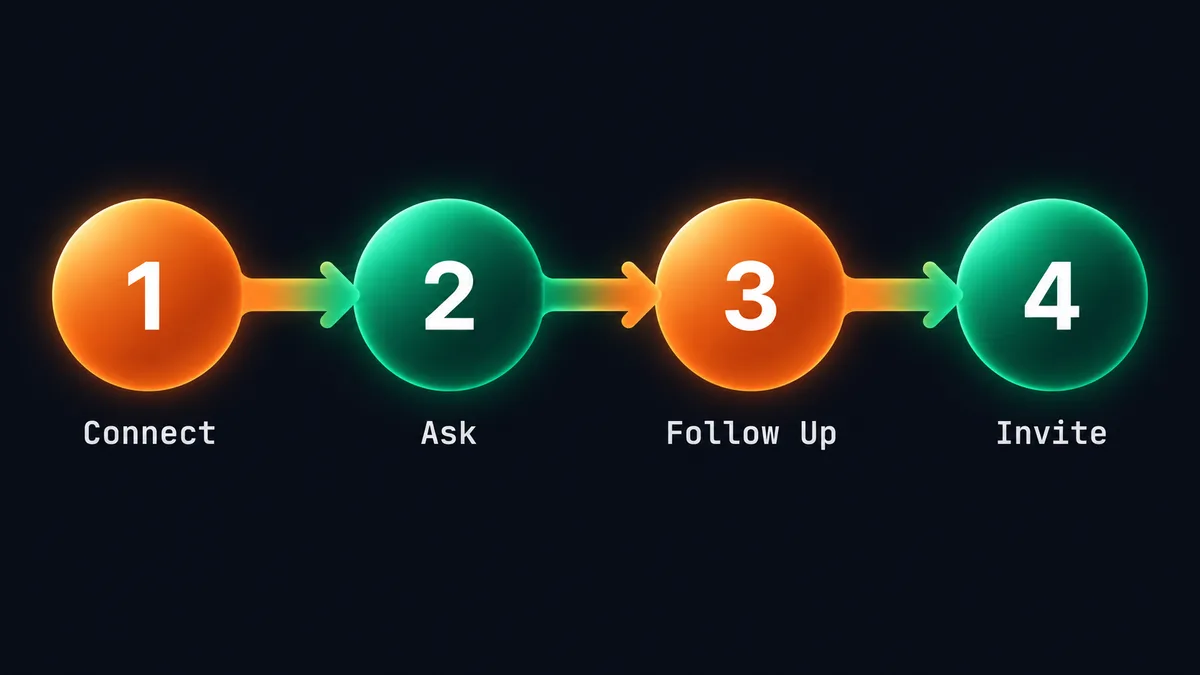
This is the same four step shape our LinkedIn outreach automation runs for coaches who would rather not research, write, and time every message themselves between client sessions. The system researches each prospect, writes the connection request and the check in around something real about them, and only hands the invitation step to you once a reply shows genuine interest. You can see the full setup and pricing on the LinkedIn and Instagram outreach automation page.
The shape matches what independent research into LinkedIn outreach for coaches keeps finding too. CoachCraft’s own breakdown of a no cold pitching LinkedIn strategy describes the same three stages in different words: build visibility first, engage honestly in the comments, then send a short personal message once there is already a real exchange to reference. Neither source is describing H3A’s own clients. Both are describing the same pattern from the outside, which is useful because it is not us grading our own homework.
Where Referrals Still Fit Alongside LinkedIn Outreach
Referrals are not a channel this guide is trying to replace. For most OCD and anxiety coaches, a trusted recommendation from a past client, a therapist who refers coaching clients for the practical, day to day side of things, or another coach who is full, still accounts for a real share of new clients. LinkedIn outreach does not compete with that. It fills the gap in weeks when nobody happens to refer anyone, which is most weeks for a solo practice.
The two channels support each other in practice. A coach who is visible and consistent on LinkedIn gives a referral source something concrete to point to: a profile, a few posts, proof the coach is active and reachable. A referral, in turn, gives an outreach message more credibility if the two people turn out to share a connection, which a quick profile check before sending the connection request will often reveal.
Treat outreach as the channel you control on a slow week, and referrals as the channel that grows once enough clients have had a good experience. Neither one needs to carry the whole practice alone, and trying to force all of your growth through just one of them is usually what makes either channel start to feel desperate.
Outreach fills the slow weeks. Referrals add up once enough people have had a good experience.
A Checklist for Judging Your Own Outreach Messages
Before you send your next check in, or hand the job to someone else, run it past these six questions.
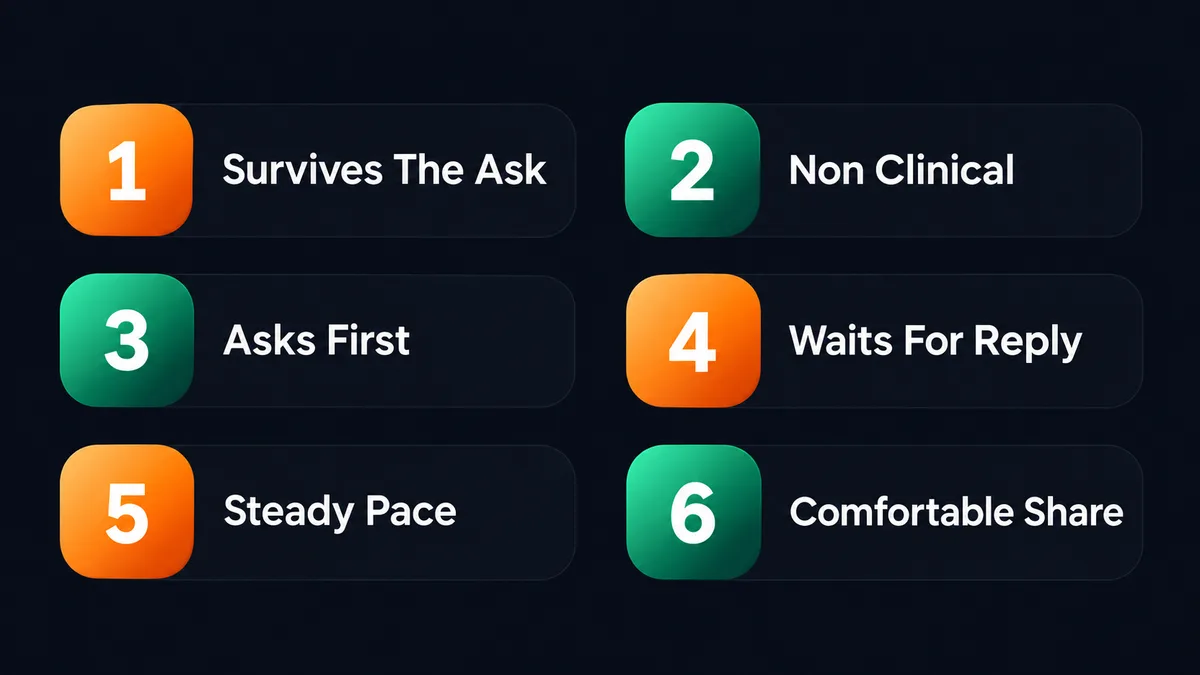
- Does the message survive without the ask? Delete the last sentence. Does it still read like something a person would send?
- Is the language clearly non clinical? No mention of symptoms, diagnosis, or treatment, even in a casual or supportive tone. Coaching and therapy are different services, and the message should never blur that line.
- Does it ask about the other person before mentioning coaching? A real question about their work or their week should come first every time.
- Does it wait for a reply before inviting a call? An invitation sent on message one or two is a pitch, no matter how it is worded.
- Is the pace steady, not sent in a single batch? A handful of check ins a day reads as a habit. Forty sent in one evening reads as a campaign, to the recipient and to LinkedIn’s own systems.
- Would you be comfortable if the recipient forwarded it to a friend, or to their therapist? If the honest answer is no, rewrite it before it goes out.
A sequence that fails two or more of these is probably earning its low reply rate honestly, and for this audience specifically, one check in that gets this wrong can cost more goodwill than it would in a less careful niche.
Why This Matters More for a Non Therapy Coaching Practice
Anyone can currently call themselves an OCD coach or an anxiety coach, since coaching in this space is not a licensed, regulated title the way therapy is. That is exactly why clear, careful language in outreach is not a nice extra, it is close to the entire product. A coach who writes a check in that respects the line between coaching and treatment is already showing, before a single session happens, the same judgment a prospective client needs to see to trust them with something personal.
Overclaiming does real damage with this audience. A message that hints at outcomes a coach cannot honestly promise, or that sounds like it belongs on a clinic’s intake form, lands badly with people who have often already dealt with a provider who overpromised. A coach who sells to individuals or to workplace wellness programs builds the same trust either way: say what coaching is, say it plainly, and let that plain language do the convincing instead of a script built to sound impressive.
That is the real argument for treating anxiety coach marketing differently from marketing almost any other kind of coaching practice. The goal of every message is not just to get clients as an anxiety coach faster. It is to get the right non therapy coaching clients, people who already understand what coaching is and is not, because that is the relationship that lasts past the first session.
What to Do Next This Week
Start by rereading your last ten connection requests against the checklist above. Most coaches find at least one message that reads as a pitch once they look at it next to someone else’s inbox instead of their own sent folder.
If the wording is already solid and the real problem is time, that is a different fix. Researching each prospect, writing a check in that earns its specificity, and tracking who needs a follow up and when takes real hours every week, hours a full coaching calendar rarely has spare between sessions. That is the gap our LinkedIn outreach automation was built to close: the research, writing, and follow up timing run on a steady schedule, and you step in once someone replies.
Setup is $299 one time, the service is $149 a month for one platform, and there is no long term contract. Instagram runs under the same automation if your audience is more active there, with a second platform available for an extra $50 a month.
You are not trying to message everyone. You are trying to keep enough honest check ins moving that a steady few turn into a reply.
FAQ
How do OCD and anxiety coaches get more clients without cold pitching?
By opening every message with a genuine check in instead of an offer, keeping the language clearly non clinical, and only naming coaching once the other person asks about it. The same four message sequence works whether a coach sends it personally or runs it through a done for you system.
Is it okay to mention OCD or anxiety directly in an outreach message?
It is safer to avoid naming a specific condition in the first few messages. Reference something true about the person’s work or week instead, and let coaching come up once they ask, so the message never reads as a diagnosis aimed at a stranger.
How is this different from cold pitching other kinds of coaching?
The mechanics are similar, but the cost of getting it wrong is higher here. This audience is unusually alert to language that sounds clinical or like a stranger is selling them something personal, so the check in has to be genuine, not just polite.
Does this work for coaches who sell to workplaces instead of individuals?
Yes. The same check in first sequence works for a message aimed at an HR contact or a manager exploring a workplace wellness program. The only change is what you ask about: the team’s workload or culture instead of a personal situation.
How many messages should go out per day?
A steady, modest number beats a large batch sent in one sitting. Bursts read as a campaign to the recipient and to LinkedIn’s own systems, while a daily habit reads as a person working through a real list.
How much does done for you LinkedIn outreach for coaches cost?
Our LinkedIn and Instagram outreach automation is $299 for setup and $149 a month for one platform, with a second platform available for an extra $50 a month and no long term contract.
OCD and anxiety coaches get more clients without cold pitching by treating every message as a check in first, keeping the language clearly separate from therapy or diagnosis, and letting referrals and outreach run side by side instead of competing for the same hour of the week. Coaches who want more non therapy coaching clients without that trade off can run the sequence themselves with the checklist above, or let it run on a steady schedule while they keep the sessions.