
An electrician can wrap up a strong month, clear five callbacks in a row, and then watch the next week open with an empty schedule and a phone that barely rings. The work was never the problem. What is usually missing is a system that keeps new business coming in on its own, instead of depending on the next homeowner who happens to remember a name from last year.
Referrals and reactive service calls can carry a small electrical business a long way, right up until a slow month makes obvious how much of that pipeline was never actually built, only hoped for. This piece looks at how electricians get more leads beyond the phone ringing on its own, why most of the standing advice assumes an owner has a spare afternoon to run it personally, and where steady, done for you outreach actually fits.
Electricians who want more leads without raising ad spend mostly get there through two channels they already touch but rarely run on purpose: structured relationships with the general contractors, property managers, real estate agents, and HVAC or plumbing companies who meet an electrical need before the electrician does, and a real follow up system for past customers around panel upgrades, EV charger installs, and seasonal maintenance. Neither channel produces much from one conversation. Both need someone keeping the outreach going every week.
On This Page
- Why Referrals Alone Leave Gaps in the Calendar
- Two Referral Layers Electricians Already Touch
- The Past Customers Already Sitting in the Files
- What Happens When Nobody Owns the Follow Up
- Doing It Yourself vs Having It Done For You
- How to Start Building This This Month
- Why Consistency Beats a One Time Introduction
- What to Do Next
- FAQ
Why Referrals Alone Leave Gaps in the Calendar
Most electrical contracting businesses run on a mix of word of mouth and whoever searches for help the week something breaks. That approach works often enough to keep the lights on, which is exactly why so few owners question it. A detailed breakdown of how electrical contractors grow their business points out that increasing job volume and revenue depends on systematic strategies for client acquisition and retention, not just technical skill on the job itself.
A website, a Google Business Profile, and a request for a review after each job matter, and most electricians already have some version of all three in place. (Source: CLIMB)
None of that explains the slow weeks. A separate guide aimed specifically at electricians names the real issue directly: generating steady leads is one of the biggest challenges in the trade, competition is fierce, and most homeowners only go looking for an electrician when something breaks, which makes it genuinely hard to stay top of mind between emergencies.
The guide’s own fix leans almost entirely on digital tools built to automate review requests and follow up sequences on the contractor’s behalf, which is a reasonable answer for a business that already has the hours to configure and babysit another piece of software. (Source: Housecall Pro)
That is the actual gap worth naming. The standing advice for electricians is not wrong. Referrals work, a clean Google Business Profile works, and fast responses to new inquiries convert better than slow ones.
The advice simply assumes someone on the team has the spare time to build and run all of it, every week, on top of running crews and showing up to job sites. For a one or two truck operation, that spare time rarely exists, which is exactly why the slow weeks keep happening even though the owner already knows the fix.
Two Referral Layers Electricians Already Touch But Rarely Run on Purpose
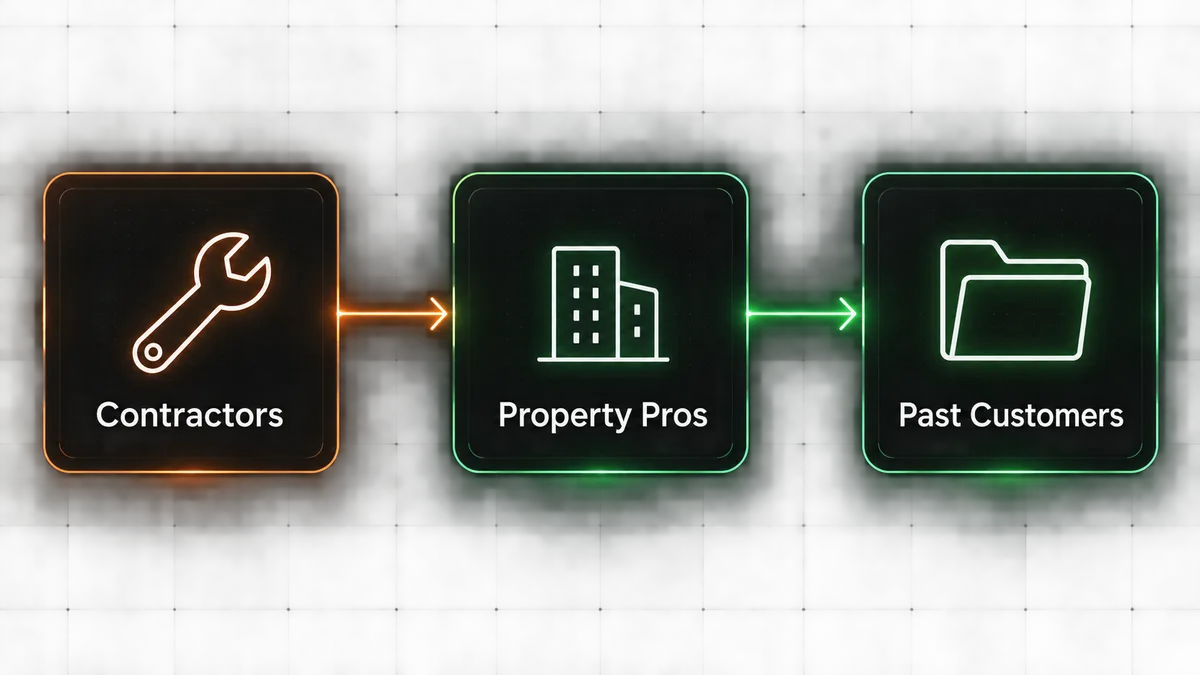
Electricians cross paths with the same handful of professionals on nearly every job, whether anyone treats those encounters as a relationship worth building or not. The CLIMB breakdown names the first layer directly: general contractors involved in renovation or new construction work are a real source of large, scheduled contracts that provide predictable workflow, since a GC who trusts one electrician will keep handing that electrician the electrical scope on every project that follows.
HVAC and plumbing companies belong in the same layer, since their own service calls routinely uncover an electrical problem the homeowner did not know about, and a plumber or HVAC tech who already has a trusted electrician to refer will send that work along rather than let it go to a stranger. (Source: CLIMB)
The second layer sits a step further from the job site but reaches the homeowner earlier. Real estate agents and property managers need reliable, quick response electrical service for property turnovers, inspections, and tenant issues on a recurring basis, and a separate real breakdown of how trade contractors build referral networks calls this exact group professional service providers, the people who interact with homeowners at critical decision points long before a contractor ever gets a call.
An agent who already has an electrician they trust refers that electrician by default, the same way a GC does, because recommending someone unreliable reflects badly on the agent too. (Source: Site Plan Creator)
A GC, a property manager, and a plumber each meet a homeowner with an electrical need before the electrician does. The electrician who has an actual relationship with a handful of them gets the call. The one who has only crossed paths with them once does not.
None of this requires inventing a new audience. Most electricians have already met several people in both layers, on a job site, at a permit office, or through a mutual client. What turns a handshake into a referral source is becoming the preferred vendor those contacts reach for by default, which the CLIMB guide frames as an exclusive referral arrangement or a reciprocal lead exchange, something that has to be proposed and then kept warm, not assumed to happen on its own after one good first impression.
The Past Customers Already Sitting in the Files
The second real lead source does not require meeting anyone new at all. It is the list of people an electrician has already done work for, sitting in an invoicing system or a stack of old job tickets, mostly untouched after the final payment clears. The same CLIMB breakdown calls this the most cost effective source of new work available to a contractor, built on maximizing the lifetime value of a relationship that already exists rather than chasing a stranger who has never heard of the business.
The mechanism is specific, not vague. The advice is to establish a system for maintaining contact with past clients long after the service call ends, through targeted communications such as seasonal reminders about panel maintenance or safety checks, paired with a formal referral program that offers a defined reward, a discount or a gift card, when a referred job books. Treating that customer list as a continuing marketing asset, rather than a closed file, keeps the business top of mind the next time anything electrical goes wrong in that house. (Source: CLIMB)
Panel work and EV charger installs make this list even more valuable than it looks at first glance. The same source points to Electric Vehicle charging station certification as a genuine growth niche, since it addresses a real and growing need for residential and commercial infrastructure, alongside smart home wiring, standby generators, and solar tie ins as other specialized, higher margin service lines.
A homeowner who already had a panel upgraded or a charger installed is a strong candidate for the next adjacent job, a generator, a second charger circuit, a smart home addition, and is already a warmer conversation than any cold lead could be.
Almost nobody runs this consistently by hand. The seasonal reminder gets sent once, around the busiest month, then skipped the next year when the schedule gets tight. The referral program gets mentioned to one or two favorite clients and never written down anywhere the whole team can repeat. The list itself is real and valuable. What is missing is not the idea, it is someone keeping the cadence going after the first attempt stops feeling new.
What Happens When Nobody Owns the Follow Up
Every guide written for electricians eventually lands on the same conclusion from a different angle: the tactics are not secret, the follow through is the hard part. The Housecall Pro guide lists seventeen separate ways to generate leads, from optimizing a Google Business Profile to running paid ads, and its own closing recommendation is to automate with digital tools, since platforms built for field service businesses can take over follow ups and lead tracking so more inquiries turn into paying customers.
That advice is sound. It is also a tool the owner still has to configure, watch, and keep feeding, on top of everything else already on their plate. (Source: Housecall Pro)
The CLIMB breakdown reaches the same wall from the referral and past customer side. It tells the reader to establish a system, implement a formal referral program, and build strategic business to business partnerships with GCs, property managers, and complementary trades, each one a real, proven channel, each one requiring the owner to build it, run it, and keep it running past the first week. Nowhere in either guide is there an option to simply hand that ongoing work to someone else and keep the crews focused on the job sites.
That is the actual, honest gap. Not a missing tactic. A missing owner for the tactic once the idea moves past day one.
Doing It Yourself vs Having It Done For You
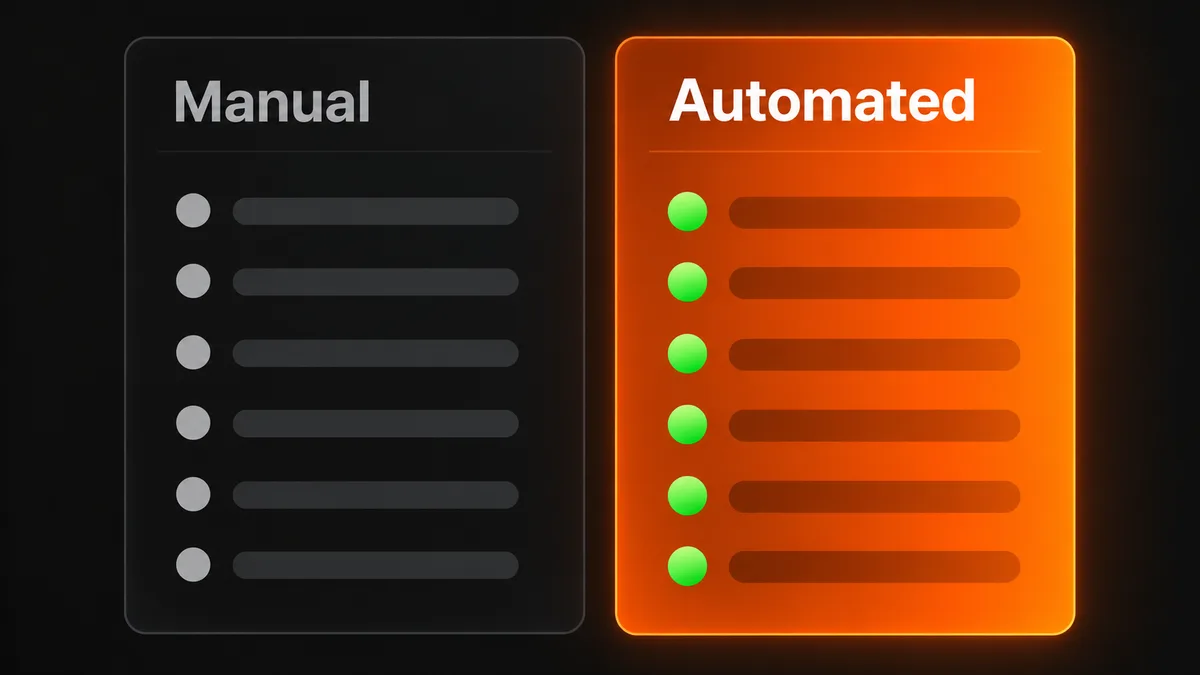
Running the referral layers and the past customer list by hand is entirely possible. It is also exactly the kind of work that gets done for one good week right after a slow month, then quietly drops once three service calls land back to back and the crew is stretched thin again. That start and stop pattern is precisely how a referral pipeline runs dry, since a GC or a property manager who hears from an electrician once and never again has no reason to think of that electrician the next time a job comes up.
This is where H3A’s Email Outreach Automation fits an electrical contracting business, and it is a direct answer to how electricians get more leads without adding another task to the owner’s own week. The general contractors, property managers, real estate agents, and HVAC or plumbing companies worth building a relationship with in a given area get researched and scored against who the business actually wants to work with, before anyone gets contacted, not scraped from a list and blasted with a form message.
A real multi step sequence, an opener, a value follow up, a direct follow up, and a clean close, goes out automatically on the right intervals, so a promising contact never goes cold just because the owner got pulled onto three job sites in one week.
The same mechanics apply to the past customer list. Reply and bounce handling stop a sequence the moment someone responds, so nobody ever gets an awkward follow up after they have already replied, and the owner gets notified the moment a real reply comes in instead of finding out three days late. It runs on real, published pricing, two hundred forty nine dollars to set up and one hundred forty nine dollars a month for up to a thousand contacted leads, with a seven day trial and a full refund if it is not working the way it should.
How to Start Building This Yourself This Month
An electrician does not need an automated system running on day one to start seeing the gap close. The groundwork matters first, and it is work any owner can do without new software:
- Write down the real names. Five to ten general contractors, property managers, or real estate agents already crossing paths with the business, plus the HVAC and plumbing companies most likely to uncover electrical work on their own service calls.
- Pull the past customer list out of the invoicing system. Anyone who had a panel upgrade, a new circuit, or a service call in the last two to three years is a real candidate for a seasonal reminder or a referral ask, not a cold contact.
- Decide what the referral reward actually is. A discount on a future service call or a gift card, stated clearly, works better than a vague thank you that nobody remembers to follow through on.
- Send something specific, not a form letter. Reference an actual recent project, a mutual client, or a specific neighborhood the GC or agent is active in. A message that could have gone to anyone usually gets read like it was.
- Follow up on a real schedule. One email rarely gets a reply from someone running their own busy business. A short sequence spaced out over a few weeks, with a genuine reason for each touch, is what actually starts the relationship.
- Keep a simple record of who replied and who did not, and keep going. A pipeline built this way looks unimpressive after week one and very different after six months of steady contact.
Why Consistency Beats a One Time Introduction
Every real example in both guides points at the same lesson from a different direction. The GC who refers work every month is not referring it because one job went well three years ago. The property manager who calls first is not calling first because of a single good first impression. Both keep calling because the electrician kept showing up in some small, consistent way long after the first conversation stopped feeling new, whether that was a quarterly check in, a holiday note, or a seasonal panel reminder that actually arrived on schedule.
A single introduction to a property manager rarely changes a quarter. Ten contacts, each followed up with on a real schedule for six months straight, changes a year.
This is also why referral partnerships and a strong Google Business Profile are not competing strategies. The profile and the reviews reach the homeowner who is actively searching today, after something has already broken. Referral layers and past customer follow up reach the next job before it becomes an emergency search at all, through the GC, the agent, or the past customer’s own memory of who did good work last time.
An electrical business running both, with the relationship side on an actual system instead of a mental note, is the one that is not nervous every time a slow week shows up on the calendar.
What to Do Next
Start with the list from the checklist above, five to ten real contacts and the past customer names already sitting in the invoicing system. Decide honestly whether the real bottleneck is finding those names or following up with them consistently once they exist, since those call for different fixes. An owner who already has the names but keeps letting the follow up slide during busy stretches is the real candidate for handing that ongoing outreach to a system built to keep it running every week without being asked.
Other trade and service businesses outside the electrical industry are already running this exact playbook for their own version of a steady referral pipeline. H3A’s piece on how pool builders get more leads covers the same underlying problem, a business that depends on referrals and reactive calls needing a steady flow of the right contacts, solved the same way: real research, a real sequence, and a system that keeps it moving after the first week.
FAQ
Do I need to stop running Google ads or local SEO to do this?
No. Referral partnerships and past customer follow up reach a different buyer at a different moment than paid search or a Google Business Profile, and most electricians running both end up with a steadier pipeline than either channel alone provides.
How is this different from just asking happy customers for referrals?
Asking current customers is one channel. Building direct relationships with GCs, property managers, real estate agents, and HVAC or plumbing companies is a second, separate channel that reaches a job before it becomes an emergency search in the first place.
Will reaching out to GCs and property managers feel like spam to them?
Not if the message is specific to their actual work rather than a generic form letter sent to a long list. A real outreach sequence researches each contact first and references something real about their business before the first message ever goes out.
What if I do not already have a list of GCs, agents, or past customers written down?
That is the actual starting point for most electricians. A short list of active GCs, property managers, and past panel or EV charger customers pulled from the invoicing system is enough to begin, and the list grows as relationships develop.
How much does Email Outreach Automation cost?
H3A’s Email Outreach Automation is two hundred forty nine dollars to set up and one hundred forty nine dollars a month, covering up to a thousand contacted leads a month, with additional capacity available in blocks of five hundred for fifty dollars a month each.
Is there a trial before committing long term?
Yes, a seven day trial runs after go live, with a full refund if it is not working the way it should.
An electrician with a quiet week on the calendar is rarely short on real relationships. The general contractors, property managers, agents, and past customers are already there, often one phone call away, each one a real source of the next job without a single dollar spent on ads. What is usually missing is the follow up that turns one good conversation into an ongoing source of work, and that is exactly the gap steady, done for you outreach is built to close.