
A room full of seventy people nods along through an hour of estate planning content, thirty of them fill out an interest card on the way out, and six weeks later the firm can name maybe four who ever called back. Estate planning seminar follow up automation exists because that drop off is not proof the seminar failed. It is proof the follow up did.
Seminars still fill rooms for estate planning firms. Direct mail invites, local newspaper ads, and referral partners can get fifty or a hundred people into a room on a Tuesday night, curious enough to spend ninety minutes learning about wills, trusts, and probate. The real problem shows up after the room empties, when the firm is holding a stack of interest cards and has no system built to work through them over the following weeks.
- What estate planning seminar follow up automation means
- Why most seminar leads go cold before anyone calls
- The three layers of follow up a seminar needs
- The real touch pattern behind a recovered seminar lead
- Webinar attendees convert differently than in person attendees
- What our email outreach automation already does for this
- Your post seminar follow up checklist
- Why this matters more than the seminar itself
- What to do next after your next seminar ends
- FAQ
What Estate Planning Seminar Follow Up Automation Means
Estate planning seminar follow up automation is a structured system that takes every name collected at a seminar or webinar, whether from an interest card, a sign in sheet, or a registration form, and moves each one through a defined sequence of contact attempts on a set schedule. Nobody has to remember to call attendee number thirty four three weeks from now. The schedule already decided that for them.
This is a different problem than the one we covered in our piece on estate planning lead follow up speed, which is about someone filling out a contact form on the firm’s website today and expecting a reply within the hour. A seminar attendee already sat through ninety minutes of content last Tuesday. The clock that matters here is measured in weeks, not minutes, but it still runs out faster than most firms expect.
Why Most Seminar Leads Go Cold Before Anyone Calls
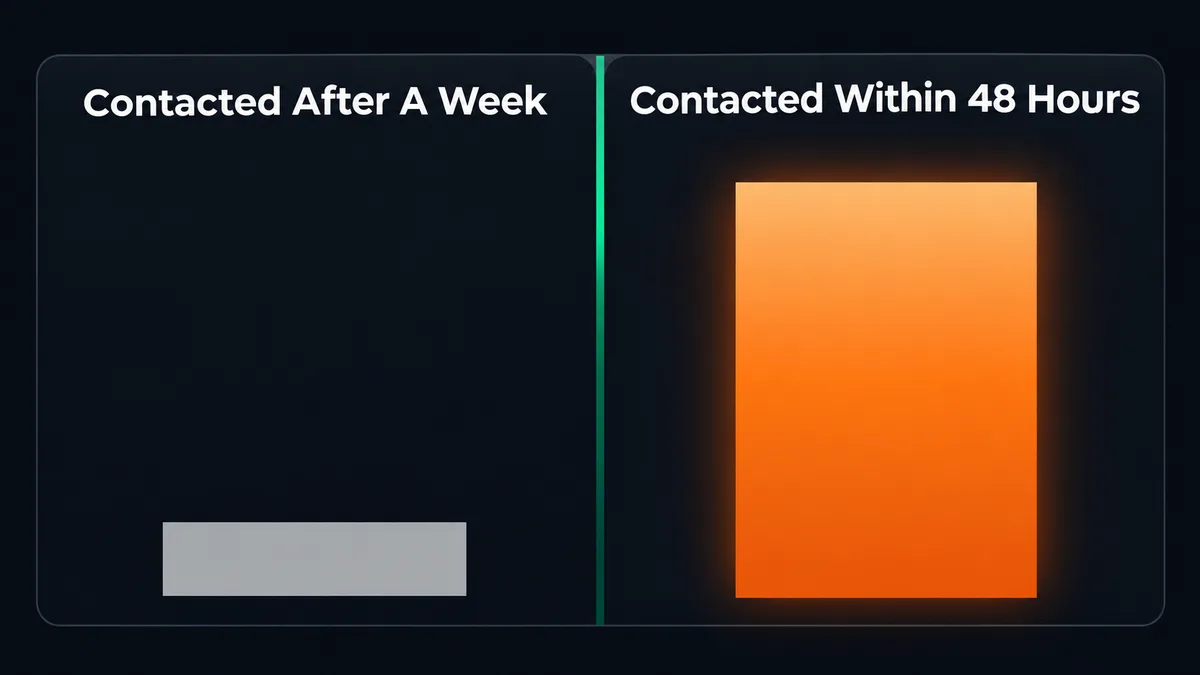
People forget most of what they hear within two days of hearing it. Brad Gotto of Fiat Wealth, writing about seminar follow up for financial and estate planning firms, puts the number at roughly 95 percent of seminar content forgotten within 48 hours. That is the real clock a firm is racing the moment the room empties, and it has nothing to do with how good the presentation was.
LeadConcepts’ 2026 estate planning seminar trends report names automated follow up as one of the clearest emerging patterns in the space this year, and for a specific reason: most consultations get booked within two days of the event itself. A firm that waits a week to start calling is not calling warm leads anymore. It is calling people who have mostly moved on with their lives.
None of this means the seminar failed to do its job. People showed up, paid attention, and filled out a card because something in the presentation genuinely interested them. What runs out is not their interest. What runs out is the window where that interest is still fresh enough to act on without a reminder.
The Three Layers of Follow Up a Seminar Needs
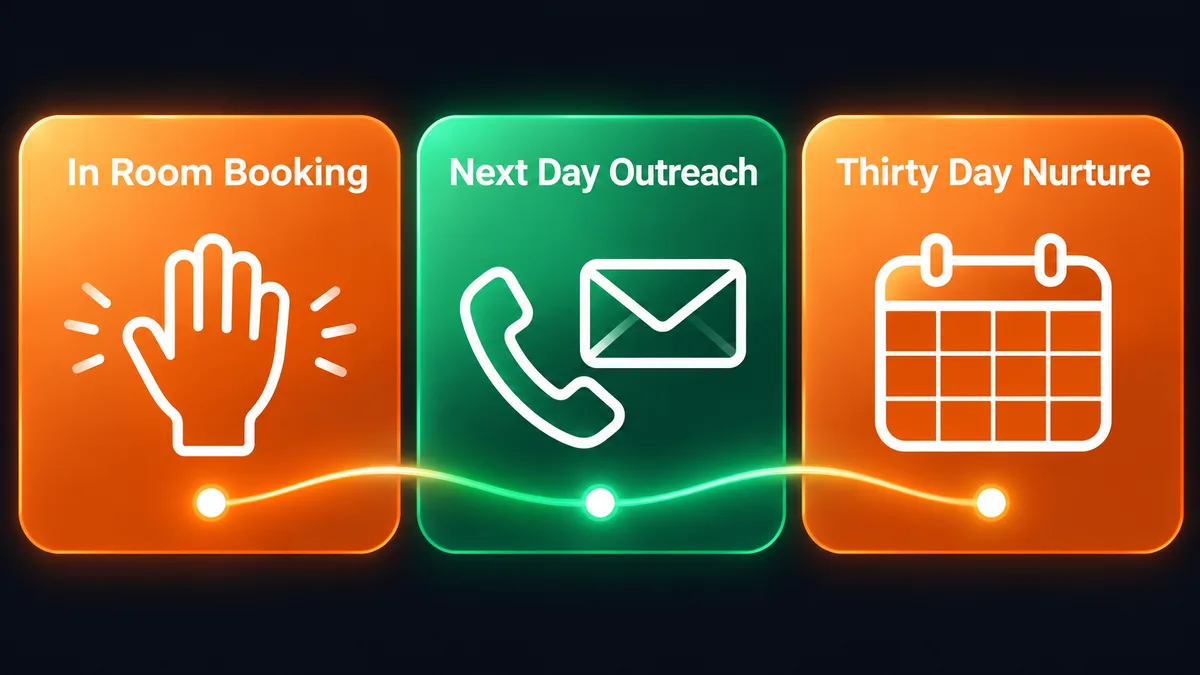
A seminar follow up system that recovers leads runs on three layers, not one, and most firms only ever build the first.
- Layer one: in room booking. Whoever is running the seminar asks for a consultation booking before anyone leaves the room. This is the highest intent moment of the entire event, and it is the one layer most firms already handle reasonably well.
- Layer two: next day personal outreach. Everyone who attended but did not book gets a real call or a personal email within 24 to 48 hours, while the seminar is still fresh enough to reference by name. Bambiz’s seminar growth research is direct about this: every registrant, whether they attended or not, should get a structured follow up sequence inside that same 24 to 48 hour window.
- Layer three: the automated nurture sequence. Everyone who still has not booked after layer two moves into a longer sequence, weekly for the first month and then spacing out from there, that keeps delivering useful content related to the seminar topic instead of a single “just checking in” message that goes nowhere.
Most firms build layer one because it happens live, in the room, without needing a system behind it. Layer two happens for a week or two after a big seminar while everyone is still motivated, then stops without anyone deciding to stop it once the next event, the next court filing, or the next client emergency takes over. Layer three almost never gets built by hand, because it requires remembering to contact the same list of names for a full month, which is exactly the kind of task a busy firm reliably drops.
The Real Touch Pattern Behind a Recovered Seminar Lead
The seminar lead nurture sequence that Fiat Wealth’s own follow up system runs on is built around twelve touches over thirty days: four calls, four emails, and four texts, mixed deliberately so the same message never arrives in the same format twice in a row. That number feels high until you remember the 95 percent forgetting curve from the last section. A single “great meeting you” email sent once is not a sequence. It is a formality that happens to look like one.
LeadConcepts’ own research backs the same pattern from a different angle: 80 percent of leads, across industries and not specific to estate planning alone, need five or more follow up attempts before they convert. Most firms stop after one or two attempts, assuming silence means disinterest, when it usually just means the first two messages arrived during a week someone was dealing with something else entirely.
A seminar lead nurture sequence built on this pattern does not pester anyone. It spreads twelve genuine touches, several of them carrying something useful rather than a bare check in, across a full month, which is a very different experience for the recipient than twelve identical “have you thought about your estate plan yet” messages.
Webinar Attendees Convert Differently Than In Person Attendees
Not every estate planning seminar happens in a hotel conference room anymore. A growing share run as webinars, and the estate planning webinar conversion rate behaves differently enough from an in person event that treating the two the same is a real mistake. LeadConcepts’ direct comparison of the two formats puts in person estate planning seminars at a 20 to 30 percent average conversion rate, against 10 to 20 percent for webinars covering the same topic.
The gap is not really about the content. Someone who drove to a venue, parked, and sat in a room for ninety minutes has already invested real effort before the follow up sequence even starts. A webinar attendee clicked a link from their couch and can close the tab the second their attention wanders. The same report notes webinars reach far more people for the same budget, and that strong follow up email sequences and interactive follow up tools can close most of that conversion gap. The follow up sequence is not a nice addition for webinar attendees. For that format, it is doing more of the actual work of conversion than the event itself.
A webinar specific nurture sequence should also account for the attendees who registered but never showed up live. Those registrants still raised their hand by signing up, and a recap email with the recording, paired with a direct invitation to book, recovers a real share of people who had every intention of attending and simply got pulled away that evening.
What Our Email Outreach Automation Already Does For This
Through our email outreach automation, a seminar or webinar attendee list gets uploaded once and moves automatically into the three layer structure described above. Layer two outreach goes out inside the 24 to 48 hour window without anyone at the firm needing to remember the date of last Tuesday’s event. Layer three runs the twelve touch pattern across the following month, weekly at first and then spacing out, with every call, email, and text logged on a dashboard so the firm can see exactly who has been contacted, who replied, and who is still sitting in the sequence.
The moment an attendee books a consultation or replies asking to be left alone, their sequence stops automatically. Nobody keeps getting nurture emails after they have already said yes, and nobody who asked to stop keeps hearing from the firm by accident. Setup is a flat $299 one time, with a $149 monthly fee that covers the full sequence and the dashboard behind it. There is a 7-day trial after go-live, with a full refund if it is not working the way it should.
Your Post Seminar Follow Up Checklist

Whether this runs by hand for now or moves straight to automation, the same questions decide whether a seminar’s interest cards turn into signed estate plans or just sit in a drawer until someone throws them out:
- Did every attendee get asked to book before leaving the room, rather than leaving that decision to whoever happened to be staffing the sign in table?
- Does everyone who did not book get a personal call or email inside 24 to 48 hours, while the seminar is still a fresh memory rather than a vague one?
- Is there an actual sequence for the next thirty days, built around real touches spread across calls, emails, and texts, instead of one message and silence?
- Does a no show who registered but never attended get a recap and a second invitation, instead of simply being dropped from the list?
- Does the sequence stop the moment someone books or asks to be left alone, so nobody keeps hearing from the firm after they have already answered?
- Is anyone tracking how many seminar attendees turn into signed clients each quarter, so the firm knows whether the seminar budget is working or just filling a room?
Why This Matters More Than the Seminar Itself
Estate planning seminar marketing, whether it runs on direct mail invites, local radio spots, or a referral partner’s mailing list, is not cheap. A single direct mail estate planning seminar campaign covering printing, postage, and the venue can run into real money before a single attendee walks through the door. None of that spend produces a signed client by itself. It only produces a room full of people who are willing to listen, and a stack of cards that represents the actual return on that spend, waiting on whatever happens next.
Several companies, among them IMS, EPSeminars, JP Marketing, Keywave Digital, and AcquireUp, already sell estate planning firms help filling that room: the mailers, the venue booking, the ads, the registration pages. Very few of them also run the firm’s ongoing lead outreach once the seminar ends, which means a firm that hires one company to fill the room is usually left to handle the weeks after it on its own, or to hire a second vendor for that piece specifically.
We have built and run more than 30 automations across 300 or more client projects, and the pattern shows up constantly across small professional service firms, estate planning included: the growth being left on the table is rarely the growth that needs a bigger marketing budget. It is the growth that already walked through the door once, sat through the whole presentation, and left a card on the table, waiting on a follow up system that never quite got built.
What to Do Next After Your Next Seminar Ends
Start with the 24 to 48 hour window, not the full month long sequence. Decide today who on staff is personally calling or emailing every non booking attendee inside two days of the next seminar, and write down exactly what that first message says. Getting that single step right recovers more leads than any later, more elaborate piece of the sequence.
If the honest answer is that nobody has the hours to run twelve genuine touches across thirty days for every seminar the firm hosts, that is exactly the gap our email outreach automation is built to close, running the same three layer structure described above in the background after every seminar and webinar, for every attendee, without a single interest card going cold because nobody had a free afternoon that week.
FAQ
How soon should an estate planning firm follow up after a seminar?
Inside 24 to 48 hours for anyone who attended but did not book a consultation on the spot. Research on seminar follow up consistently points to that same window, since most consultations end up booked within two days of the event, and most of what attendees heard is forgotten soon after that.
Can estate planning seminar follow up be automated?
Yes. An uploaded attendee list can move automatically through a next day outreach step and a thirty day nurture sequence of calls, emails, and texts, with the sequence stopping the moment someone books or asks to be left alone, all without a staff member tracking each name by hand.
Do webinar attendees need a different follow up sequence than in person seminar attendees?
Yes. In person seminar attendees convert at a noticeably higher average rate than webinar attendees, largely because they invested more effort just by showing up. Webinar sequences should also include a recap and second invitation for registrants who signed up but never attended live.
How many follow up touches does a seminar lead need?
Research on seminar follow up points to roughly twelve touches spread across thirty days, mixing calls, emails, and texts, as a realistic pattern. That sounds like a lot until you consider that a large share of leads across industries need five or more follow up attempts before they convert at all.
What happens to seminar leads if nobody follows up?
They go cold within days, not weeks. Most of what an attendee heard in the room is forgotten within about 48 hours, and a firm that waits a week to start calling is mostly reaching people who have already moved on or booked somewhere else.
Is seminar follow up automation only useful for large firms with big seminar budgets?
No. A solo estate planning attorney running one seminar a quarter has the exact same forgetting curve working against them as a firm running one every week. The sequence does not need to be complicated to work. It needs to run the same way every single time, regardless of how many seminars the firm hosts in a year.
An estate planning seminar does not need a bigger room or a flashier presentation to turn into signed clients. It needs a follow up system that reaches every attendee inside the first 48 hours, keeps reaching the ones who have not booked for a full month after that, and never depends on a staff member remembering to pick the stack of interest cards back up. The firms already filling their pipeline from seminars are not running better seminars than everyone else. They built a system around what happens after the room empties, instead of hoping the follow up happens on its own.