
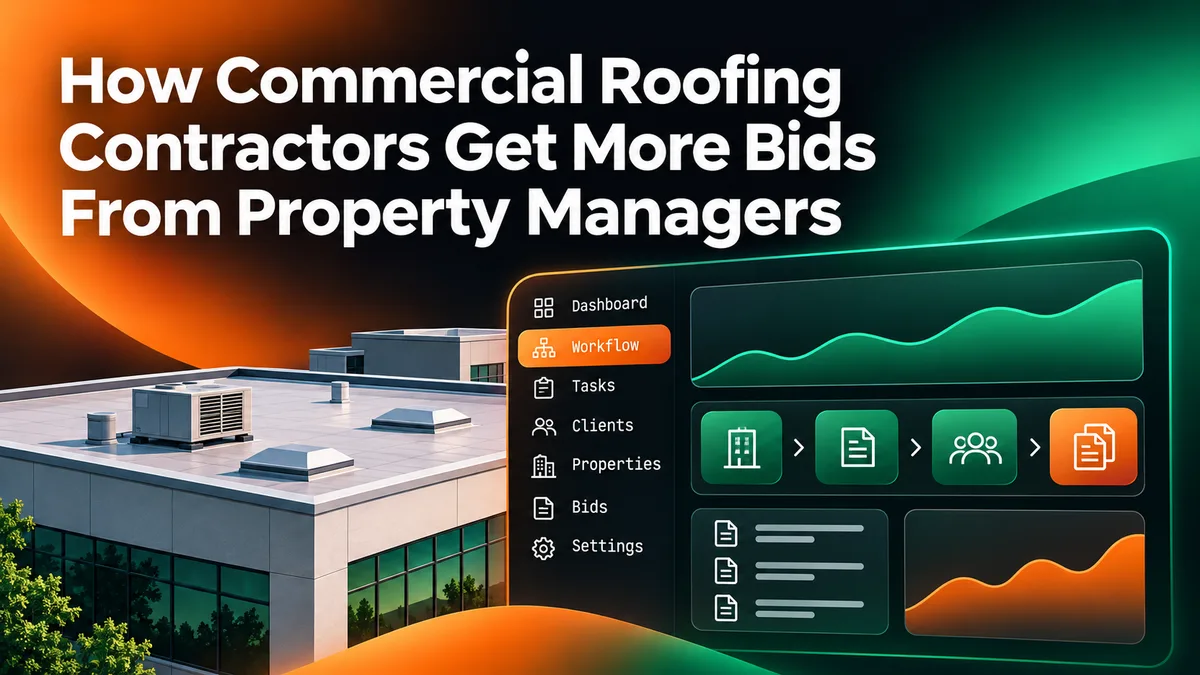
Most commercial roofing bids never reach a contractor who is looking for them. A property manager puts out a request for proposal, calls the three or four vendors already in her file, and moves on. If your name is not already in that file, the bid never shows up in your inbox at all. That is the real, boring reason so many capable commercial roofing crews stay booked through referrals and general contractor relationships alone, and it is also exactly the gap that determines how commercial roofing contractors get more bids from property managers in the first place.
We build done for you outreach systems for small B2B service businesses, including contractors who sell into property management and facilities accounts. This post covers how property managers choose a roofing vendor, seven real ways to get in front of more of them, where email outreach fits and where it does not, and a checklist to run before your next bid season starts.
Quick answer: Commercial roofing contractors get more bids from property managers by getting onto their short list before an RFP goes out, not by chasing the RFP after it is already posted. That means a real, current contact list of property and facility managers, bid responses that match the exact scope asked for, and a steady outreach schedule instead of one seasonal push. Cold email can be part of that mix, but it has to look like a specific, relevant introduction rather than a mass blast, since several property management associations explicitly discourage unsolicited sales email to their members.
What’s covered
- Why commercial roofing bids keep going to the same short list
- How property managers pick a roofing vendor
- 7 ways commercial roofing contractors get more bids from property managers
- Where email outreach fits, and the one objection to handle first
- A checklist to run before your next RFP season
- Why consistency beats one big push
- What to do next
- FAQ
Why Commercial Roofing Bids Keep Going To The Same Short List
A property manager overseeing a dozen buildings does not go looking for a new roofing vendor every time a roof needs attention. She calls whoever already quoted the last job, or whoever the general contractor on the last renovation recommended, because that person already proved they show up, document the work, and do not blow the budget. That short list is not closed by accident. It is closed because nobody new ever gave her a reason to add a name to it.
This is the same mechanism that keeps referral-dependent trades stuck at a steady but flat workload. A roofing company can be genuinely excellent at the work and still invisible to the exact buyer who controls when a 10,000 square foot flat roof gets reroofed instead of patched again. The buyer is not searching Google for “commercial roofing contractor.” She is working from a short list she already trusts, built from past jobs and real referrals, and the only way onto that list is to reach her directly before the next RFP, not after.
The roof does not get the bid. The name already on the property manager’s short list gets the bid, long before the RFP is written.
How Property Managers Pick A Roofing Vendor
Coastline Equity’s own guide for property managers on vendor selection lays out the real process most buyers run: collect three or more written bids on the identical scope of work, compare them line by line, and watch for a lower headline number that turns out costlier once the exclusions get added back in. A contractor who submits a vague one page quote while a competitor submits a detailed, itemized bid against the exact spec requested is not competing on price at that point. They are competing on whether the property manager can trust the paperwork, and the vague quote loses that comparison almost every time.
Facility and property managers also weigh vendor selection the way any repeat buyer weighs a decision they will have to live with for years. Warranty terms, proof of insurance, references from similar sized buildings, and a contractor’s responsiveness during the bidding process itself all get read as a preview of how that contractor will behave mid project, when something inevitably needs a decision. A contractor who is slow or vague at the bid stage is telling the property manager exactly what to expect later.
This is also why the content gap in this space is real. Most roofing marketing talks about homeowners or general “get more leads” advice. Very little of it is written from the property and facility manager’s actual buying process, which is the exact angle that determines how commercial roofing contractors get more bids from property managers instead of just more general inquiries.
7 Ways Commercial Roofing Contractors Get More Bids From Property Managers
None of these require a bigger crew or a lower price. They require getting found by the right buyer, consistently, before the RFP exists.

- Build a real, current list of property and facility managers in your service area. Not a purchased list that is two years stale. Start with the property management companies running the building types you already do well (retail strip centers, light industrial, multi tenant office), and keep it updated as staff turn over, since the person who approved last year’s bid is often gone by the next one.
- Lead every first contact with proof, not a pitch. Bonding, insurance certificates, manufacturer certifications, and two or three references from buildings of a similar size and roof type tell a property manager you are a safe name to add to her file before she has seen a single quote.
- Match every bid response to the exact scope requested. An itemized bid against the real spec, not a rounded estimate, is what lets a property manager compare you fairly against the vendors already on her list, per the same written bid comparison process Coastline Equity’s guide describes.
- Follow up on every submitted bid on a real schedule. A single follow up a week or two after submission, asking if there are any questions on the scope, keeps your name active in a decision that often takes longer than either side expects.
- Introduce yourself before the RFP exists, not after. A short, specific email introducing your company ahead of a known renovation or a roof nearing the end of its service life reaches a property manager while she still has a choice in who gets invited to bid at all.
- Turn every completed job into two more leads. Ask the property manager for a direct introduction to a colleague managing a similar portfolio, and ask the general contractor on the job for the next project they are bidding. Both referral paths are faster to close than cold outreach, but they only produce volume if asking is a habit, not a one off.
- Track who you have reached and when. A simple log of which property managers you have contacted, when, and what came of it is the difference between a real outreach effort and a handful of emails sent during a slow month that nobody follows up on.
Where Email Outreach Fits, And The One Objection To Handle First
One real gap worth naming directly instead of glossing over: some property management associations, including BOMA chapters, explicitly ask vendors not to send unsolicited sales email to member inboxes. That does not mean cold email is off the table for reaching property managers. It means a mass blast with a generic subject line is the wrong version of it. A short, specific introduction tied to a real building type or a real renovation timeline, sent to a property manager who oversees that kind of portfolio, is a different thing entirely, and it is the version that gets read instead of reported as spam.
The actual obstacle for most roofing companies is not whether outreach works. It is whether it happens consistently. Building the contact list, researching which property managers are worth reaching, writing something specific instead of generic, and following up without letting the thread go cold takes real hours every week. So it happens in a burst before a slow season, then stops, and the property managers who would have added your name to their file this quarter never hear from you at all.
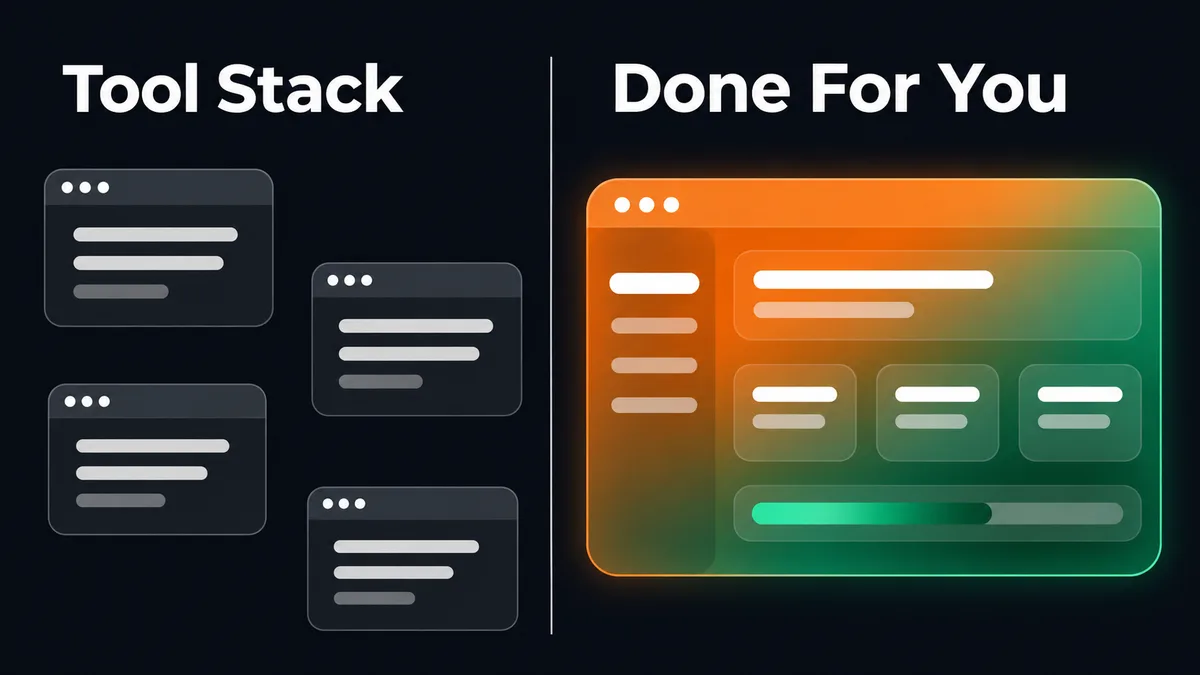
A self-serve outreach tool does not fix that problem by itself. Apollo, Instantly, or a general SDR agency still leave the research, the writing, and the daily follow through on your desk, or add a recurring agency fee on top of it. Agencies that specialize in this exact vertical exist too, the kind built for contractors already doing several million dollars a year in revenue, which is a different buyer than a growing regional roofing company still building that short list for the first time.
Our own Email Outreach Automation is built for that gap. It researches real property and facility management contacts in your service area, scores them against who you want to reach, and runs a proper multi step sequence automatically, an opener, a value follow up, a direct follow up, and a clean close, sent with controlled daily limits so your domain’s sending reputation stays protected.
You see every lead and every reply on a dashboard. You are not logging in to write copy or babysit a campaign. Sending reputation and cold email deliverability are both handled as part of the setup, not left for you to troubleshoot after inboxes start marking messages as spam. It runs at $299 for one time setup and $149 a month, covering up to 1,000 leads contacted a month, with no long term contract.
A Checklist To Run Before Your Next RFP Season
Commercial roofing work is seasonal in most regions, which means the property managers deciding on next year’s reroofs are often building their shortlist months before the RFP goes out. Running this checklist ahead of that window matters more than running it after.
- Pull a current list of property and facility management companies for the building types you want more of, not a list from two seasons ago.
- Confirm your insurance certificates, bonding documentation, and manufacturer certifications are current and ready to send on first contact.
- Collect two or three recent references from similar sized buildings and have them ready, not promised “on request.”
- Draft one short, specific introduction email per building type, not one generic template for every property manager on the list.
- Set a real follow up schedule for every bid submitted this season, and write it down somewhere you will check.
- Ask for a direct introduction from every property manager and general contractor you worked with in the last twelve months.
A property manager’s short list gets built months before the RFP goes out, which means the outreach has to happen months before it too.
Why Consistency Beats One Big Push
Roofing Contractor Magazine’s 2025 commercial roofing trends report found 66 percent of contractors reported real sales growth over the prior year, with more than 75 percent expecting growth to continue, even as 57 percent reported rising labor costs squeezing margins on every job. Growth in this industry right now is not coming from an easier market. It is coming from contractors who keep showing up in front of the right buyers while labor costs make every bid matter more.
A single round of outreach before a slow month does not build the kind of trust a property manager needs before she adds a new name to a list she only reviews once a year. Getting onto that list takes repeated, specific contact over a real stretch of time, the same property managers reached more than once, with a reason to remember your name the next time a roof needs attention. That is a scheduling and consistency problem as much as a marketing one, and it is exactly where a system that runs the same outreach every week, without needing someone to remember to do it, earns its keep.
The same pattern shows up in adjacent trades selling into the same property management buyer. Our own piece on how commercial cleaning companies get more contracts covers a nearly identical buying process, written for a different trade bidding into the exact same property manager’s file.
What To Do Next

Start with the list. Pull together the property and facility management companies in your service area that oversee the building types you want more of, and check how many of them you have contacted in the last twelve months. Most roofing companies find the honest number is close to zero, which is the real reason the same handful of names keeps winning the bids.
If building and running that outreach consistently is the part that keeps slipping, that is exactly the gap our Email Outreach Automation is built to close, researching the right property managers, writing the sequence, and running it every week without it depending on someone remembering to send the next email.
FAQ
How do commercial roofing contractors usually find property manager leads today?
Most rely on referrals from past clients and general contractors, plus repeat work from property managers they already bid for. Very few run any structured outreach to property managers they have not already worked with, which is the real gap this post covers.
What does a mid-size commercial reroof cost in 2026?
Cost guides put systems like TPO and EPDM at roughly 7 to 14 dollars per square foot in 2026, which puts a 10,000 square foot reroof in the 70,000 to 140,000 dollar range before specialty systems like PVC or standing seam metal push the number higher.
Is cold email to property managers allowed?
It depends on the property management association and the specific company. Some, including certain BOMA chapters, discourage unsolicited sales email to members. A short, specific introduction tied to a real building type or project, sent to a property manager who genuinely oversees that kind of portfolio, is a different thing than a mass blast and is the version worth sending.
How is done for you email outreach different from buying a leads list?
A purchased list is just names and emails, with no research behind who is a fit or any sequence built to reach them. Done for you outreach researches each contact, scores them against who you want to work with, and runs a full multi step sequence automatically, with replies and bounces handled the moment they happen.
What does H3A’s Email Outreach Automation cost?
$299 for one time setup and $149 a month, covering up to 1,000 leads contacted per month, with a 7-day trial and a full refund if it is not working the way it should.
How long before outreach to property managers turns into a bid invitation?
There is no universal number, since it depends on whether a given property manager has a roof decision coming up at all. The pattern that does hold is that a property manager contacted once and never again rarely remembers the name by the time a decision comes up, while one reached consistently over months is far more likely to add that name to the short list.
Getting more bids from property managers is rarely about being the better roofing crew. The contractors winning that short list spot are the ones who show up in front of the right buyer, with the right proof, before the RFP is even written, and keep showing up instead of disappearing after one quiet month. Build the list, fix the follow up, and make the outreach a habit instead of a once a year push. If keeping that habit running every week is the part that keeps slipping, see what our done for you outreach includes below.