Financial coach referrals feel like the safest way to grow. A happy client tells a friend, the friend books a call, and the whole thing costs nothing but a good first engagement. For the first year or two, that loop works well enough that most coaches never build anything else next to it.
Then growth flattens, and it is not obvious why. The client work is still good. The reviews are still warm. But the calendar stops filling the way it used to, because a referral only network has a ceiling, and most coaches hit it without ever seeing it coming.
Quick answer: Financial coach referrals are real and worth keeping, but data from the financial advisory world shows the fastest growing practices pull less than 40 percent of new clients from referrals, while slower growing ones lean on referrals for 60 percent or more. Coaches who add a niche focus, real content, and a direct outreach channel keep growing once their personal network stops producing new names on its own.
What’s Covered
Why financial coach referrals quietly stop scaling
A referral carries more trust than almost any other way a new client can find a coach, and that is exactly why it feels like the only strategy worth running. A friend vouching for someone they already worked with removes most of the doubt a stranger would otherwise bring to a first call. There is nothing wrong with that trust. The problem is what it depends on.
A referral network only grows as fast as the number of people already in your corner. Each client has a limited circle of friends who are even in the market for a financial coach, and most of them only think to mention your name when money comes up in conversation on its own. That happens on their schedule, not yours. A coach who built a full roster on referrals two years ago can find themselves with the exact same roster today, not because the work got worse, but because the well of people who already know them personally ran its natural course.
A referral network only grows as fast as the number of people already inside it. That is a ceiling, not a strategy.
Financial coach referrals also tend to arrive in a clump rather than a steady drip. One good month brings three new clients because three past clients happened to mention you in the same stretch, then two quiet months follow with nothing at all. That pattern makes income planning difficult and makes it tempting to treat the slow months as bad luck instead of what they actually are, which is a sign the pipeline has exactly one input.
The coaches who notice this early are usually the ones who were already tracking where new clients came from. Most are not. A coach who has never written down the source of each new booking tends to only feel the slowdown once it has already stretched into a second or third quiet month, by which point rebuilding a second channel from nothing takes longer than it would have if it had started a year earlier alongside the referrals that were still working fine.
What the real referral numbers show
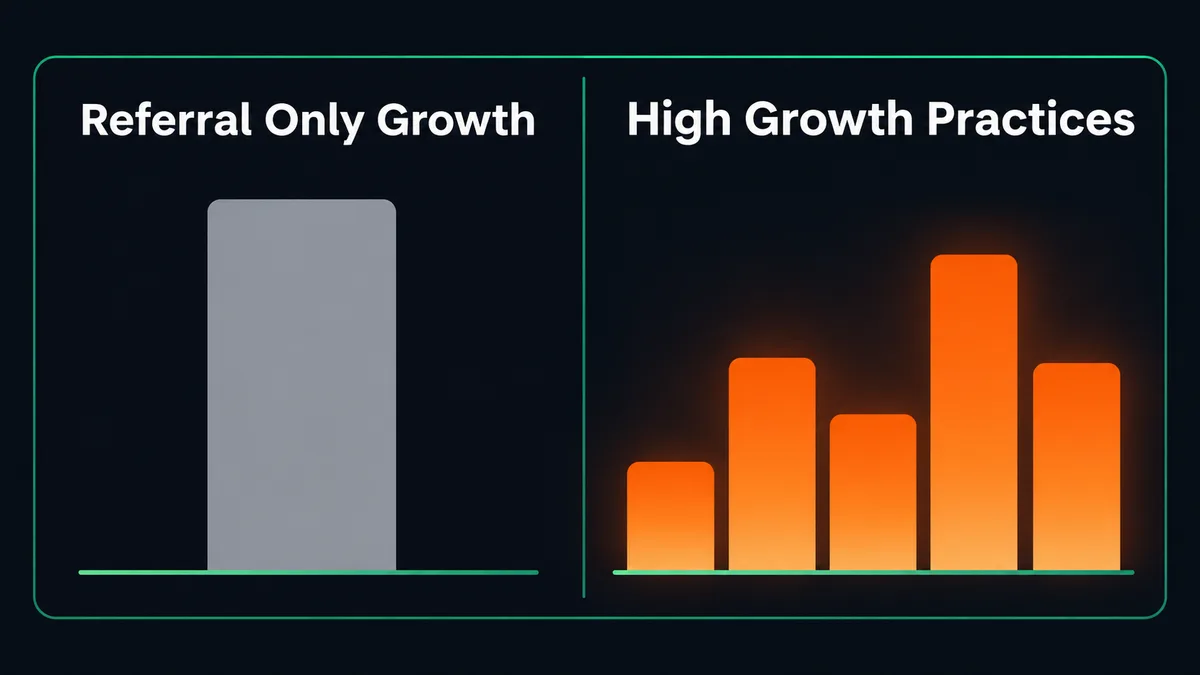
The clearest data on this comes from the financial advisory world, where referral dependency has been studied for years. Kitces Research, which tracks hundreds of advisory practices, found that practices with standout organic growth never receive more than 40 percent of their new client revenue from referrals, while practices stuck at slower growth rarely see that figure fall below 60 percent. Referrals are still the single most used tactic across advisors, at 88 percent, and they still account for an average of 44 percent of new clients overall. The firms growing fastest are simply the ones that lean on referrals the least.
Client behavior backs this up from the other direction. A survey of 1,000 advised investors by Ficomm Partners and Absolute Engagement found that 50 percent of investors with 5 million dollars or more in assets found their current advisor with no referral involved at all, and among investors under 45, that number rose to 59 percent. Only 31 percent of the wealthier group and 8 percent of the younger group relied on a referral by itself. People are finding financial help through channels that have nothing to do with being introduced by a friend, and they have been doing it for a while.
The same survey found a smaller but growing pattern worth naming honestly: 9 percent of all respondents used an AI tool such as ChatGPT, Gemini, or Claude while searching for their advisor, and that number climbed to 25 percent among investors under 45. That is not yet the dominant channel, but it is one more sign that the search for financial help has moved well past asking a friend.
Put the two data sets side by side and the picture is consistent rather than coincidental. The practices growing the fastest are the ones least dependent on referrals, and the clients those practices serve are increasingly finding them through something other than a referral in the first place. Neither fact alone would be convincing. Together, they describe the same shift happening from both directions at once.
Why coaches hit the referral ceiling earlier than advisors
Most of the referral research above comes from licensed financial advisors, not financial coaches, since that is where the larger studies happen to exist. Coaches are a different, newer category of profession, which actually makes the referral ceiling worse, not better. Working with a licensed advisor has been common for decades, so a typical person’s social circle usually includes someone who has used one. Working with a financial coach is still new enough that far fewer people in that same circle have ever hired one, which means the pool of people even capable of making that specific referral is smaller from the start.
Engagement length matters here too. A coaching relationship is often shorter than a multi-year advisory one, which means a coach needs a steadier flow of new names just to hold revenue flat, not to grow it. An advisor who keeps a client for a decade can afford a slow referral trickle. A coach whose typical engagement runs a few months cannot.
One honest distinction worth stating plainly: financial coaches are not licensed financial advisors, and the strict marketing review rules that apply to registered investment advisors do not apply the same way to coaching. What does apply to every coach sending commercial email, licensed or not, is the CAN-SPAM Act, which requires a working unsubscribe link and an accurate sender identity on anything that looks like marketing. That is a low bar compared to advisor compliance, and it is one more reason a coach can move faster on building a real outreach channel than a licensed advisor often can.
What a diversified client acquisition system looks like
Diversifying away from referral only growth does not mean abandoning referrals. It means adding channels that do not depend on someone else remembering to mention your name.
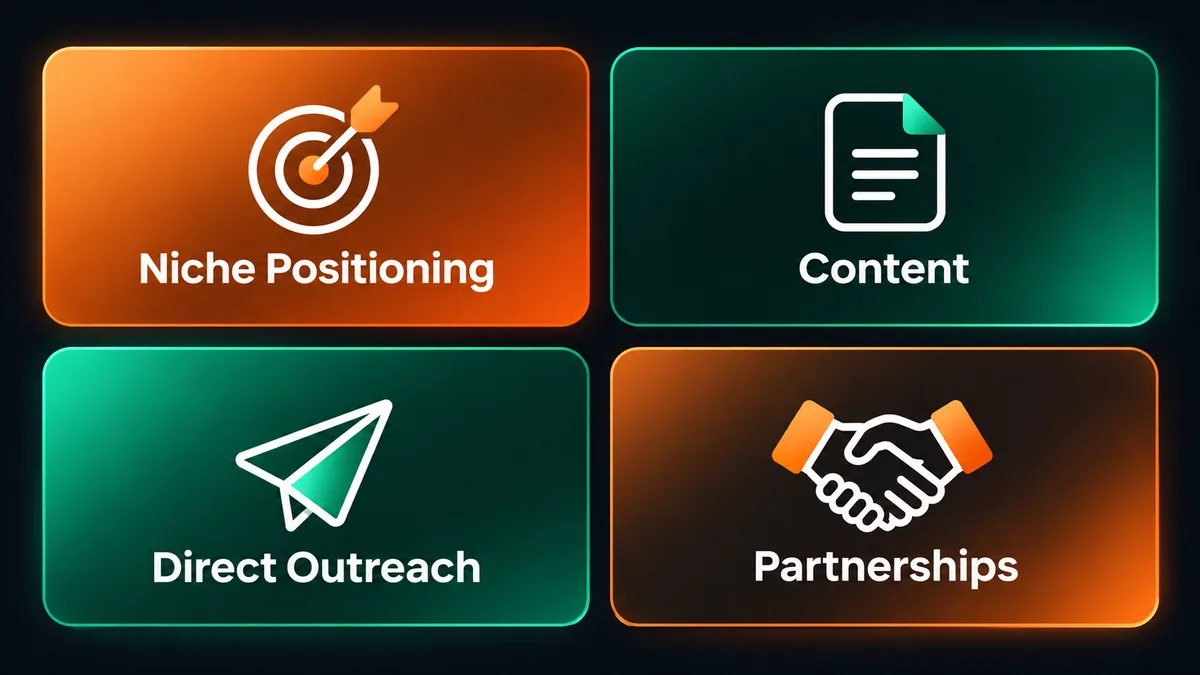
Pick a specific person, not a general audience
A coach who works with “people who want to manage their money better” sounds like every other coach. A coach who works with “new parents trying to stop living paycheck to paycheck after a second income disappeared” gives a prospect an exact situation to recognize themselves in. AssetMark’s research on advisor marketing, citing the same niche effect studied by Kitces, found that advisors who pick a specific niche earn an average of 12 percent more than generalists who do not. Specificity is not a smaller market. It is a clearer message.
Publish something a stranger can find without knowing you
Referrals work because someone already vouches for you before the first call. Content does the same job for a stranger who has never heard your name, by showing them you understand their exact problem before they ever pay for a session. It does not need to be daily. It needs to exist consistently enough that someone searching for help on their own has something of yours to find.
Build a direct outreach channel you control
Referrals and content both depend on someone else taking the first step toward you, whether that is a past client mentioning your name or a stranger stumbling on a post. A direct outreach channel flips that, letting a coach reach people who fit their actual niche instead of waiting to be found. This is the piece most coaches skip, usually because doing it by hand on top of an already full client calendar is the first thing to get dropped in a busy month.
Referrals and content both wait for someone else to take the first step. A direct outreach channel does not.
Partner with people who already talk to your niche
A single warm introduction from a friend only happens once. A standing relationship with an accountant, a divorce attorney, or an HR leader who regularly talks to your exact niche can send multiple introductions over years, because they are not relying on a single memory of one good conversation. This still counts as diversifying, even though it looks similar to a referral, because the relationship is deliberate and repeatable rather than left to chance.
A checklist for moving past referral only growth
These five steps are worth running in order, even for a coach whose referral pipeline still feels fine today.
- Write down the one specific type of person your coaching actually fits best, by situation, not just by job title or income bracket.
- Ask every new client where they genuinely heard about you first, and track the answer for at least a quarter before trusting your memory of it.
- Publish one real piece of content a month that speaks directly to the specific person from step one, not a general money tip.
- Build a short list of the exact kind of prospect who fits your niche, even before you have a way to reach them at scale.
- Start one outbound channel deliberately, by email or direct message, instead of letting outreach only happen when the calendar is already slow.
Why this matters more now
Financial coaching keeps growing as a category, which means more coaches are competing for the same referral conversations inside the same friend groups. A referral network that felt plenty big three years ago is now splitting attention across more coaches than it used to. Standing out inside that same small circle gets harder every year this keeps going.
At the same time, the way people search for financial help keeps shifting away from word of mouth, toward search engines, social content, and now a small but real share through AI tools directly. A coach who only shows up through referral is invisible to every single one of those searches, no matter how good the coaching actually is. Showing up outside your own existing network is becoming a separate, necessary skill on its own, not a nice extra for coaches who happen to have spare time.
None of this means the personal relationship behind coaching disappears once a second channel exists. A direct outreach message or a piece of content is still just an introduction, the same way a referral is an introduction. What changes is who controls when that introduction happens. Waiting on a referral means waiting on someone else’s schedule. Running a second channel means a coach decides when the next conversation starts, instead of hoping one shows up.
What to do next
The checklist above works. The hard part is running it consistently once client sessions, content, and life fill the calendar back up, which is exactly when outreach is the first thing to slip. A coach running outbound by hand usually manages a burst for two or three weeks, then drops it the moment a busy stretch hits, and the pipeline goes quiet again until the next slow month forces a restart.
This is the part a system can carry instead. Our email outreach automation finds and researches prospects who match your specific niche, scores them against who you actually want to work with, and sends a real multi-step sequence automatically, every day, without you logging in to run a campaign. The moment someone replies, their sequence stops and you get notified, so you are having the actual conversation yourself, not managing software.
Pricing is published, not quote only. Setup is 299 dollars one time, and the service runs 149 dollars a month for up to 1,000 leads contacted, with no long term contract. A 7-day trial covers the first week after go-live, with a full refund if it is not working the way it should. We have built more than 30 of these automations across other client facing businesses, and this is the same category of system, not a different one built just for a blog post.
If LinkedIn is where your specific niche actually spends time, our guide to LinkedIn outreach for financial coaches covers the account-safe mechanics of running that channel the same way, by sequence and research rather than mass messaging.
FAQ
Are financial coach referrals a bad source of clients?
No. Referrals carry real trust and should keep running. The problem is treating them as the only channel, since a referral network only grows as fast as the people already inside it.
What percentage of new clients should come from referrals?
Research on financial advisory practices found the fastest growing firms keep referrals under 40 percent of new client revenue, while slower growing firms often sit above 60 percent, suggesting lower referral dependency tracks with faster growth.
Why do financial coaches run out of referrals faster than advisors?
Financial coaching is a newer category than financial advising, so fewer people in a typical client’s circle have ever hired one, and coaching engagements tend to run shorter, both of which shrink the referral pool faster.
Do financial coaches need to follow the same compliance rules as advisors?
No. Licensed investment advisor marketing rules do not apply to non-licensed coaches the same way. The real rule that applies to any commercial email, coach or advisor, is CAN-SPAM, which just requires a working unsubscribe link and accurate sender information.
What should a financial coach do first to diversify beyond referrals?
Start by naming the one specific type of person your coaching fits best, then track where new clients actually say they heard about you for a full quarter before adding a new channel on top.
Can email outreach automation work for a niche as specific as financial coaching?
Yes. The system researches and scores prospects against your specific niche before contacting them, so a narrow audience is an advantage, not a limitation, since every message can speak to that exact situation.
Financial coach referrals will always be worth having. What changes the trajectory of a practice is refusing to let them be the only thing standing between a coach and their next client. The coaches who keep growing past the first couple of years are not the ones with the best referral network. They are the ones who stopped waiting on it alone.